Plenty of homeowners get told they need a water softener before anyone has tested a drop of their water. In Prescott, that advice often does not hold up. The City of Prescott describes its water as moderately hard, averaging 75 to 130 ppm, or 4.3 to 7.6 grains per gallon. That is enough to leave some spotting and slow buildup, but it is not the kind of water that destroys a water heater in a few years.
So water softeners in Prescott are an option, not an obligation. For some households they are well worth it. For others, a simple under-sink reverse osmosis tap or nothing at all is the better call. Prescott Plumbing Pros can connect you with a local plumber who tests your water, explains what the reading means, and recommends equipment only when it solves a problem you actually have.
Start Here: What Is Coming Out of Your Tap?
The city’s range is a useful starting point, but it is not a measurement of your house. Many homes around the Quad-City area are on private wells or are served by other providers, and those can read very differently.
A hardness test at your fixture takes a few minutes, and you see the number. If you are on a private well, that test matters even more, because well water can vary from one property to the next. Every recommendation after that is based on your reading.
Signs Hardness Is Bothering You
At moderate hardness, the effects are mostly about comfort and gradual wear. Common reasons people consider treatment:
- White spots on glassware, shower doors, and faucet finishes.
- Crust on shower heads and aerators that slowly reduces flow.
- Tankless water heaters that need descaling more often than the owner would like.
- Soap and shampoo that do not lather as easily.
- Taste that some people simply do not like for drinking and coffee.
If none of these bother you, you may be fine without a softener. If one or two do, the right fix depends on which.
Matching the Equipment to the Problem
These products often get sold together, but they solve different problems.
| System | What It Does | What It Does Not Do |
|---|---|---|
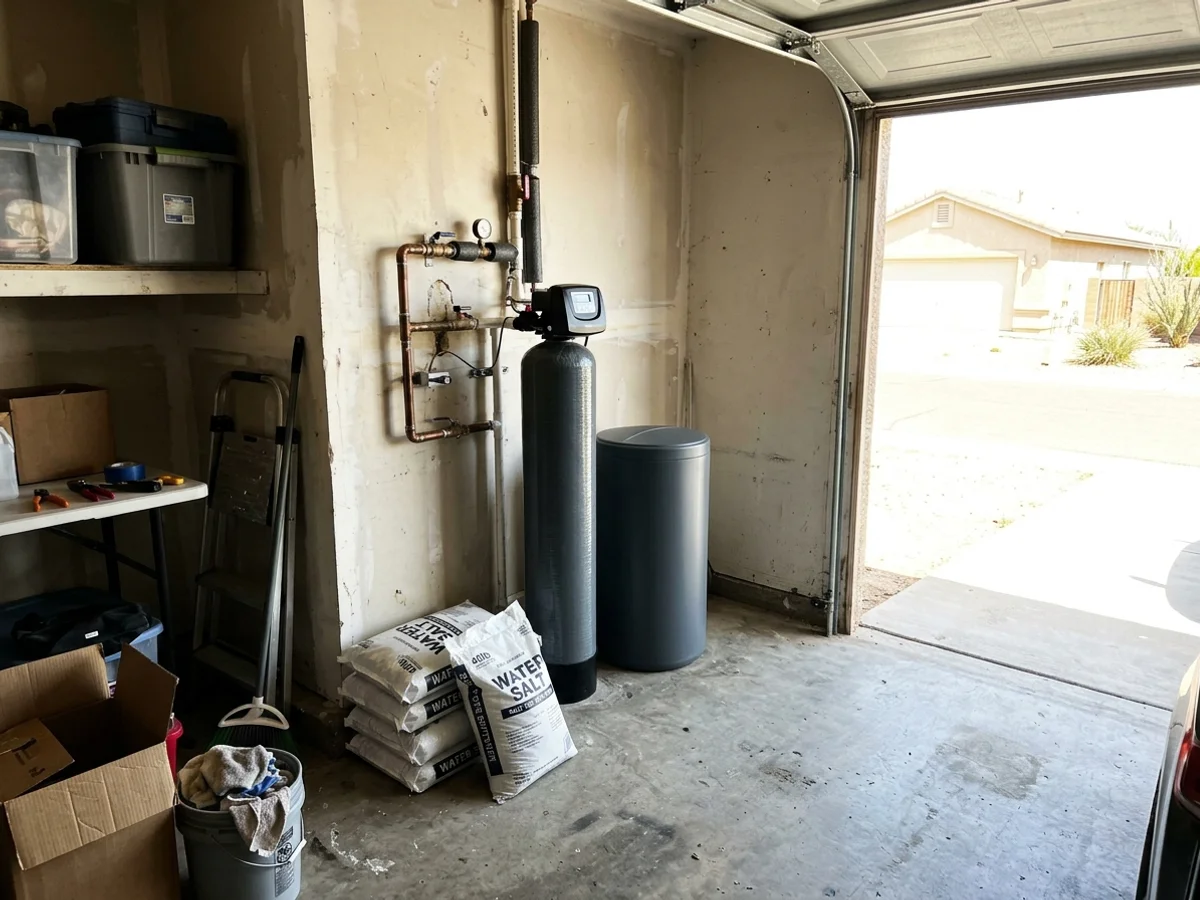
| Ion-exchange softener | Removes calcium and magnesium for the whole house, cutting scale and spotting | Improve drinking water taste on its own |
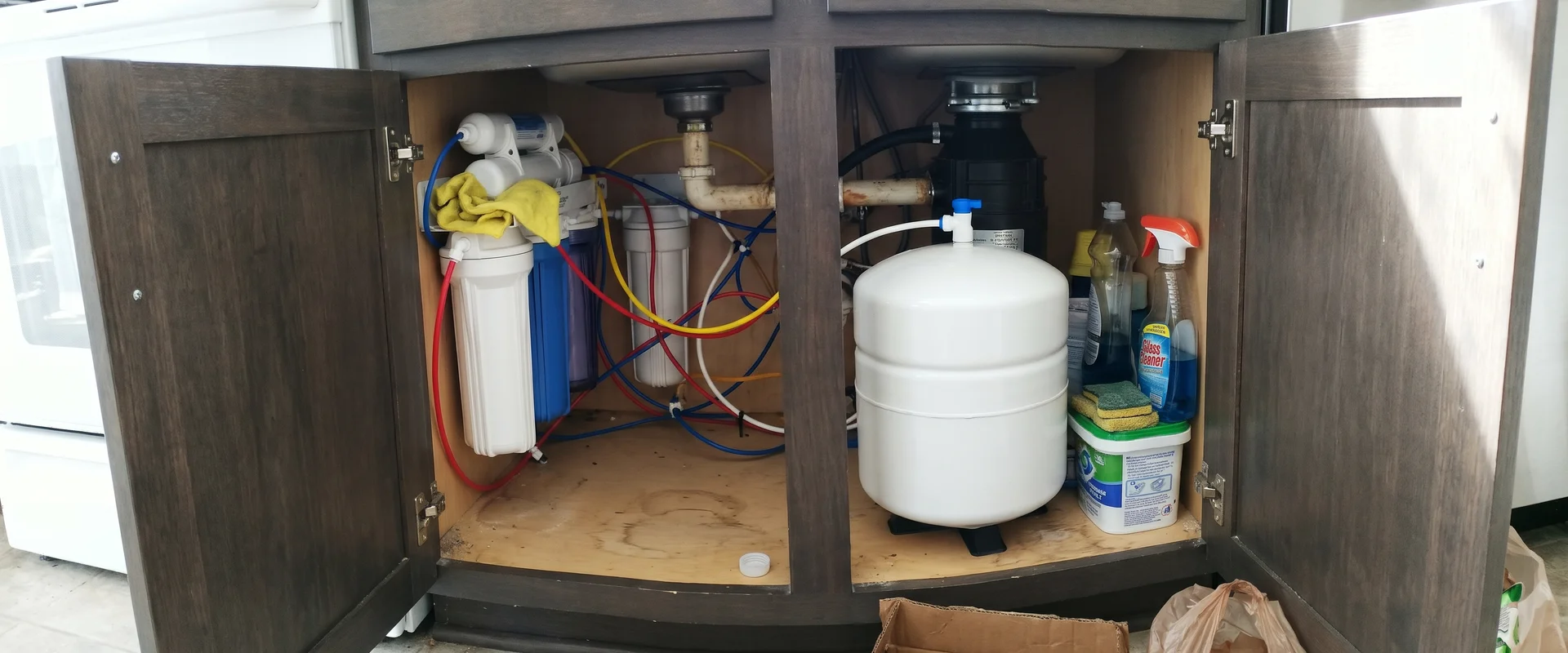
| Under-sink reverse osmosis | Reduces dissolved solids at one drinking tap for better taste | Protect the rest of the plumbing |
| Whole-house filtration | Reduces sediment, chlorine taste, and odor at every tap | Remove hardness |
| Salt-free conditioner | Changes how scale forms so it sticks less | Remove hardness |
If taste is the only complaint, an RO tap in the kitchen may be all you need. If spotting and tankless upkeep are the issue, a softener makes more sense. Some households choose both.
When a Softener Is Worth It Here
A softener tends to pay off in a few situations:
- You have a tankless water heater and want to stretch the time between descaling visits.
- Your well tests harder than city water, sometimes considerably.
- You are tired of spotting on glass, fixtures, and shower doors.
- You are putting in new high-end fixtures and want them to keep their finish.
If you are on city water and none of these apply, a softener is a nice-to-have, and it is fine to skip it.
Sizing Without Overbuying
The math is straightforward: daily water use multiplied by your measured hardness gives the grains removed per day. The softener needs enough capacity to handle that and still go several days between regenerations.
Because Prescott city water is only moderately hard, many homes need a smaller unit than a generic sales sheet suggests. An oversized system costs more and adds nothing. An undersized one regenerates too often and wears its resin early. Getting the sizing right matters more than the brand on the tank. Our water treatment guides cover sizing in more detail.
Cold-Weather Placement and Upkeep
Softeners usually sit in the garage, and in this climate that matters. A softener valve, brine line, or drain line in an unheated garage can freeze on a hard winter night. If your garage regularly drops below freezing, ask about insulating the lines, keeping the space warmer, or placing the unit somewhere more protected.
Routine upkeep is simple. Top up salt when the brine tank runs low. Change RO filters on schedule and replace the membrane every few years. If you leave a cabin or second home for the winter, put the softener in bypass, and drain it if the house will not stay heated. When you return, run the taps for a few minutes before drinking RO water.
Avoid These Buying Mistakes
- Buying before testing. Without a reading, sizing is a guess.
- Leaving the factory hardness setting. The valve should be programmed to your measured hardness.
- Skipping the bypass valve. Without one, servicing the softener means shutting off the whole house.
- Assuming filtration handles hardness. Carbon and sediment filters do nothing for scale.
You can request a free estimate and ask about any service call fee before booking. Water testing, softener and RO installs, and service on existing systems are available across Prescott, Prescott Valley, Chino Valley, Dewey-Humboldt, and Mayer.