Fixture repair in Prescott covers the jobs that tend to sit on a list for months: the toilet that refills itself at 3am, the bathroom faucet that drips no matter how hard you turn the handle, the disposal that hums and does nothing. None of them feel urgent. All of them get more expensive the longer they wait. A rocking toilet slowly rots the subfloor. A seized shutoff turns a simple faucet swap into a whole-house water shutdown. A slow drip becomes a cartridge that will not close at all.
Prescott Plumbing Pros can connect you with a local plumber who finds the part that actually failed, replaces it properly, and tells you plainly whether anything else in the house is likely to follow. You can call at any hour in English or Spanish, or request a free estimate online.
Repair First, Replace When It Makes Sense
The default approach is to fix the component that wore out. Swapping a whole fixture because it is quicker than diagnosing one part is just an upsell. Here is how the decision usually goes:
| Fixture Condition | Usual Action | Why |
|---|---|---|
| Worn flapper or fill valve | Rebuild | Inexpensive parts, tank is still sound |
| Cracked toilet bowl or tank | Replace | Porcelain cracks cannot be repaired |
| Dripping faucet, good body | Rebuild | New cartridge restores the seal |
| Corroded faucet base or obsolete model | Replace | Parts unavailable or body failing |
| Disposal leaking from the bottom | Replace | Internal seal failure |
| Seized angle stop | Replace | A valve that will not close is a flood risk |
Ask about any service call fee before booking, and you will know where you stand before work begins.
What Goes Wrong With Toilets
Toilets fail in a small number of predictable ways, and most of them are rebuilds rather than replacements.
- Running or refilling on its own. A worn flapper, a fill valve that will not shut off, or a rough flush valve seat. If the porcelain is sound, a rebuild fixes it.
- Weak or incomplete flushes. Often buildup in the rim holes and siphon jet, a partly closed supply stop, or a flapper that drops too early.
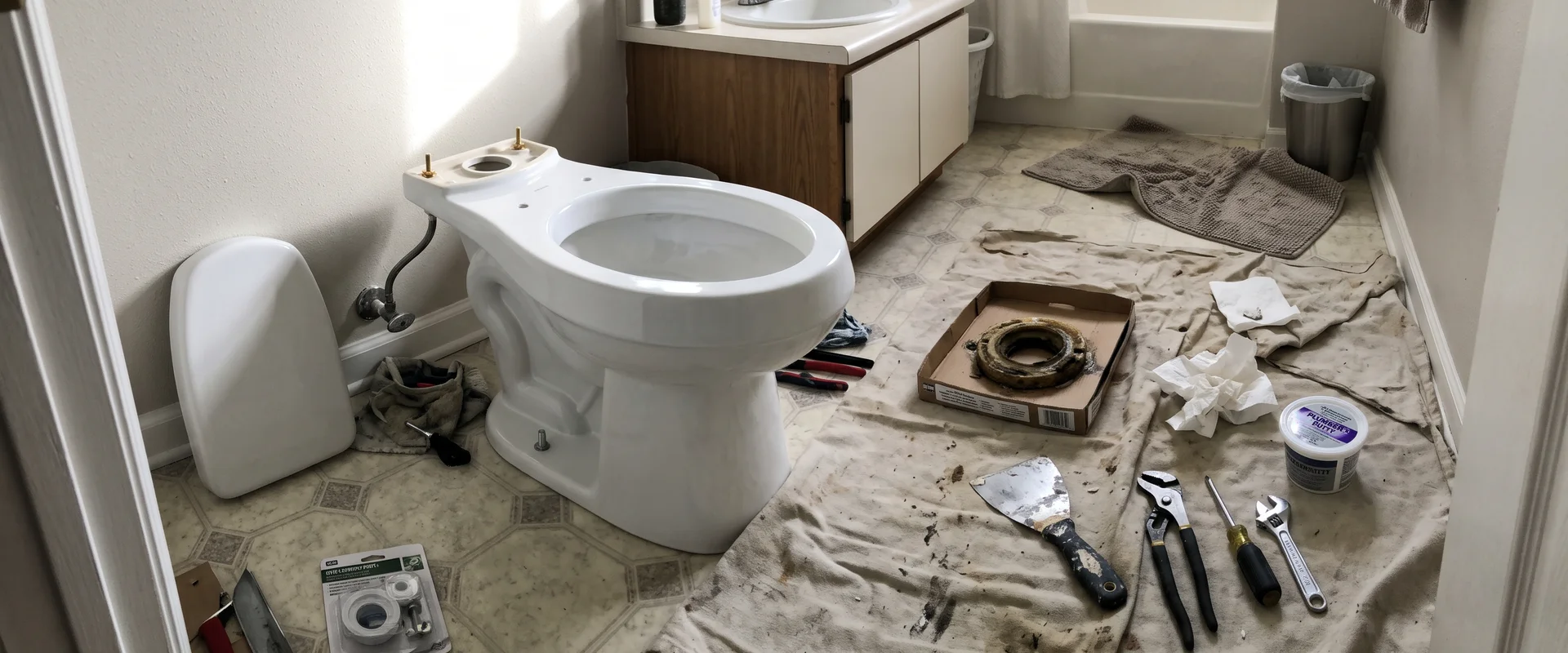
- Rocking or seeping at the base. Loose bolts or a flange that sits below the finished floor. The toilet gets pulled, the flange checked, a new wax ring set, and the bowl leveled so the seal holds.
- Cracks in the tank or bowl. These cannot be repaired. A new toilet goes in with a fresh supply line and a working shutoff.
Faucets That Drip, Stiffen, or Lock Up
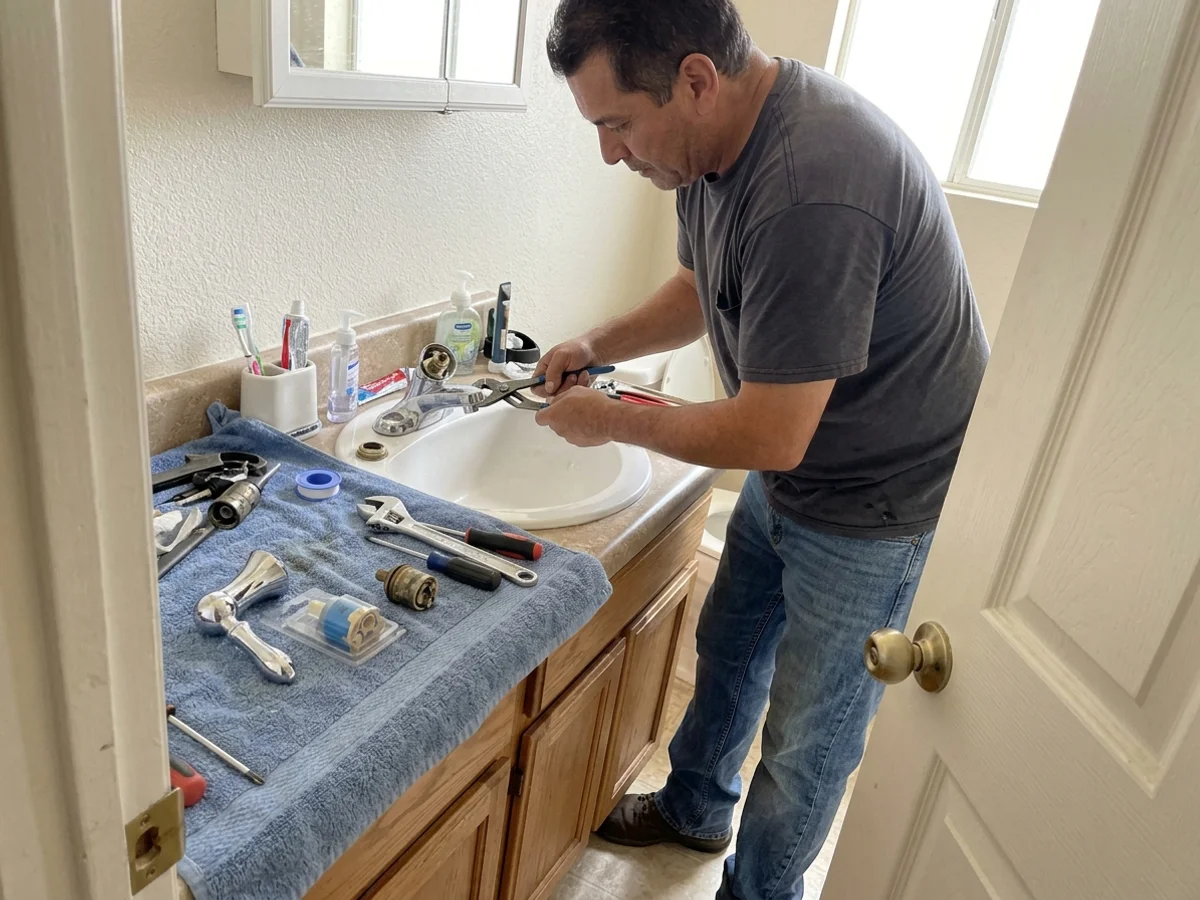
Most faucets use either a ceramic disc cartridge or a seat and spring assembly. As those surfaces wear, they stop sealing cleanly. A drip from the spout or a handle that feels gritty or stiff usually means the cartridge is on its way out.
When the faucet body is solid and parts are available, a new cartridge or seats bring it back. Kitchen, bath, tub, shower, and utility faucets are all covered, along with full replacement. During the job, corroded angle stops under the sink get replaced too, because a valve that will not close always seems to fail at the worst moment.
Garbage Disposals: Jams, Hums, and Leaks
- Humming but not turning. A jam. With the power off, the hex socket underneath often frees it.
- Tripping the reset over and over. The motor is overheating or wearing out.
- Leaking at the sink flange or drain connection. A reseal or a new gasket.
- Leaking from the bottom of the housing. The internal seal has failed and water is reaching the motor. That is a replacement.
How Local Homes Affect Fixture Wear
Housing age matters more here than water chemistry. In older central Prescott homes, the fixtures themselves are often fine to rebuild, but the shutoffs, supply lines, and drain connections behind them are decades old. A faucet replacement in one of those houses often turns into a shutoff and supply line replacement too, and that is worth doing while the cabinet is already open.
Newer homes in subdivisions around Prescott Valley tend to have the opposite issue: builder-grade fixtures that wear quickly, toilets set on flanges that were never quite level, and supply lines that were installed tight with no slack.
Water quality plays a smaller role. The City of Prescott describes its water as moderately hard, so mineral buildup on aerators and cartridges is real but slow. If you are on a private well and see heavy white crust on fixtures, test at the tap. A softener is optional here, more of a comfort choice than a requirement.
Fixtures and Cold Weather
Winter is hard on fixtures that sit on exterior walls. Supply lines feeding a bathroom sink or toilet against an outside wall can freeze on the coldest nights. Opening the vanity doors overnight during a hard freeze lets warm room air reach the pipes. A toilet or sink that suddenly will not fill on a frigid morning may have a frozen supply line, not a broken fixture. Close the shutoff and call before the ice thaws.
Handle It Yourself or Call Someone?
- Reasonable DIY jobs: Swapping a flapper, cleaning an aerator, freeing a jammed disposal with the hex socket, tightening a loose toilet seat.
- Worth a call: A shutoff that will not close, a toilet that rocks or seeps at the base, a faucet with a seized cartridge, a disposal leaking from the housing, or any replacement where the supply lines are old.
Forcing an old valve is the most common way a small DIY job becomes an emergency. If the shutoff fights you, stop and call. Our fixture repair guides cover common problems in more detail.
Fixture repair and replacement are available across Prescott, Prescott Valley, Chino Valley, Dewey-Humboldt, and Mayer, in English or Spanish.