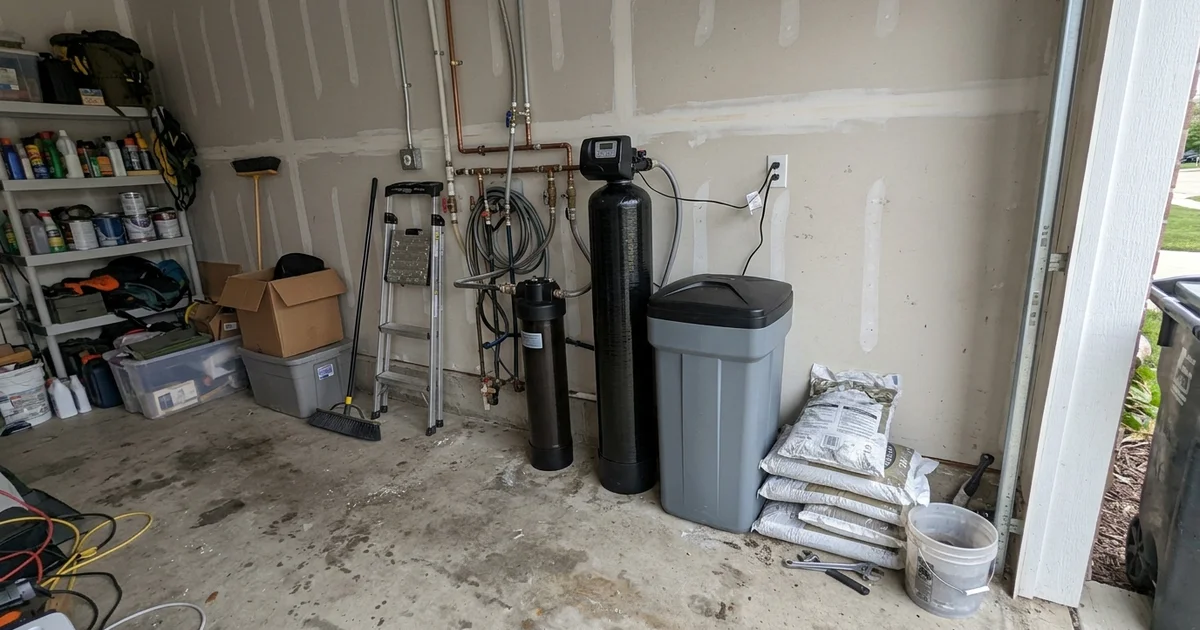
The name is where the confusion starts. A “salt-free water softener” sounds like a softener that skips the salt. It is not. It is a different technology that does a different job. Here is what each one does, and how that plays out on water that is moderately hard rather than extreme.
Two machines, two jobs
Salt-based softener (ion exchange). Water passes through a tank of resin beads that grab calcium and magnesium and release sodium in their place. When the beads are full, the unit rinses them with salty brine from a second tank and sends the hardness down a drain. Water leaving a working softener tests close to zero hardness.
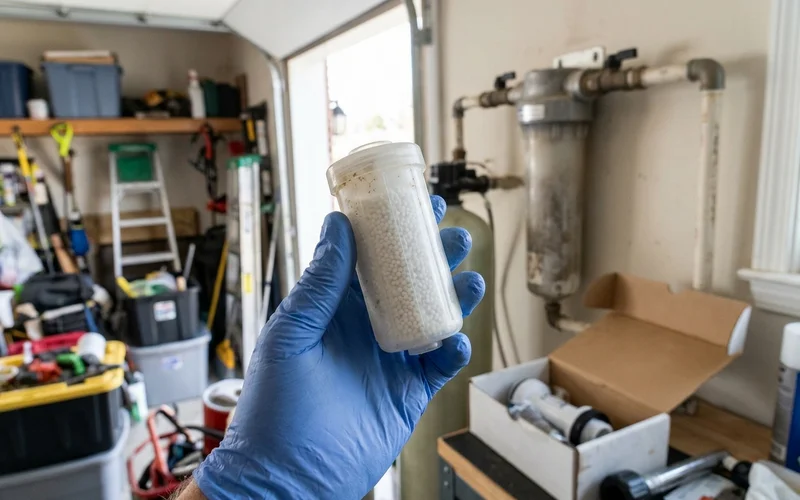
Salt-free conditioner. Most use template-assisted crystallization (TAC) media. The media encourages dissolved minerals to form tiny, stable crystals that are less likely to stick to pipes and heating surfaces. The minerals stay in the water. A hardness test after a conditioner reads about the same as before.
One takes hardness out. The other changes how it behaves.
Head to head
| Criteria | Salt-based softener | Salt-free conditioner |
|---|---|---|
| Removes hardness minerals | Yes | No |
| Hardness reading after treatment | Near zero | About the same |
| Scale reduction in water heaters | Strong | Moderate |
| Spotting on glass and fixtures | Largely stops | Reduced, still present |
| Feel of the water, soap lather | Noticeably softer | About the same |
| Ongoing upkeep | Salt refills, occasional service | Media change every few years |
| Water used for regeneration | Yes | None |
| Needs a drain nearby | Yes | No |
| Footprint | Resin tank plus brine tank | Single compact housing |
| Freeze sensitivity | Brine tank and valve must stay above freezing | Housing must stay above freezing |
Why the hardness level matters
The City of Prescott describes its water as moderately hard, averaging 75 to 130 ppm, or about 4.3 to 7.6 grains per gallon. That is the range where the gap between the two technologies is smallest. There is less mineral to manage, so a conditioner’s partial protection covers more of the problem than it would on very hard water.
So the decision here is less about which one “works” and more about what you want:
- Want water that feels soft and leaves almost no spots? Salt-based.
- Want less scale with no chores? Salt-free.
- On a private well? Test first. If your tap reads harder than the city range, the case for salt-based gets stronger.
Local expert insight
In this climate, where you can put the equipment matters. Both systems have to stay above freezing. A softener also needs a drain for its regeneration water. If the only spot near the main is an unheated garage or crawl space with no drain, a conditioner inside the heated envelope, or no treatment at all, may be the practical answer.
When salt-free is the better fit
- Nobody wants to handle salt. Heavy bags every month or two are not realistic for every household.
- There is no drain near the main.
- Space is tight.
- Sodium is a concern. The added sodium from a softener is small, but if a doctor has restricted it, an RO tap for drinking water or a conditioner avoids the question.
- The home is a cabin or second home used part of the year, with light demand.
When salt-based is the better fit
- You have a tankless water heater and a busy household.
- Your well tests harder than the city supply.
- You want noticeably softer water for skin, hair, and laundry.
- You are already planning an RO system and want to extend its membrane life.
What upkeep looks like
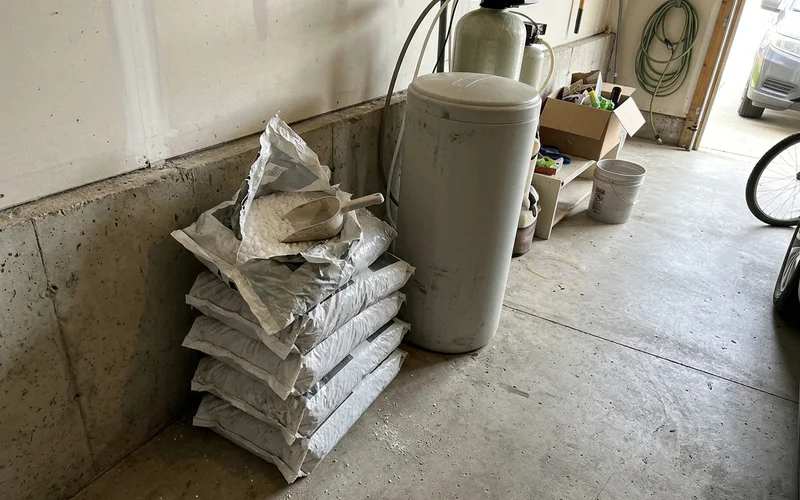
Salt-based: check the brine tank monthly and top it up as needed. At moderate hardness, a correctly sized unit uses less salt than it would on very hard water. An undersized one regenerates too often and wastes salt; see our guide on softener sizing.
Salt-free: replace the media on the manufacturer’s schedule, typically every few years, and check that the housing is not exposed to freezing.
The bottom line
On Prescott city water, both are legitimate choices, and so is choosing neither. Pick salt-based if you want hardness gone; pick salt-free if you want less scale with almost no maintenance. Our water softeners and reverse osmosis service starts with a hardness test at your tap. Request a free estimate from Prescott Plumbing Pros, answered 24/7 in English or Spanish, and ask about any service call fee before booking.