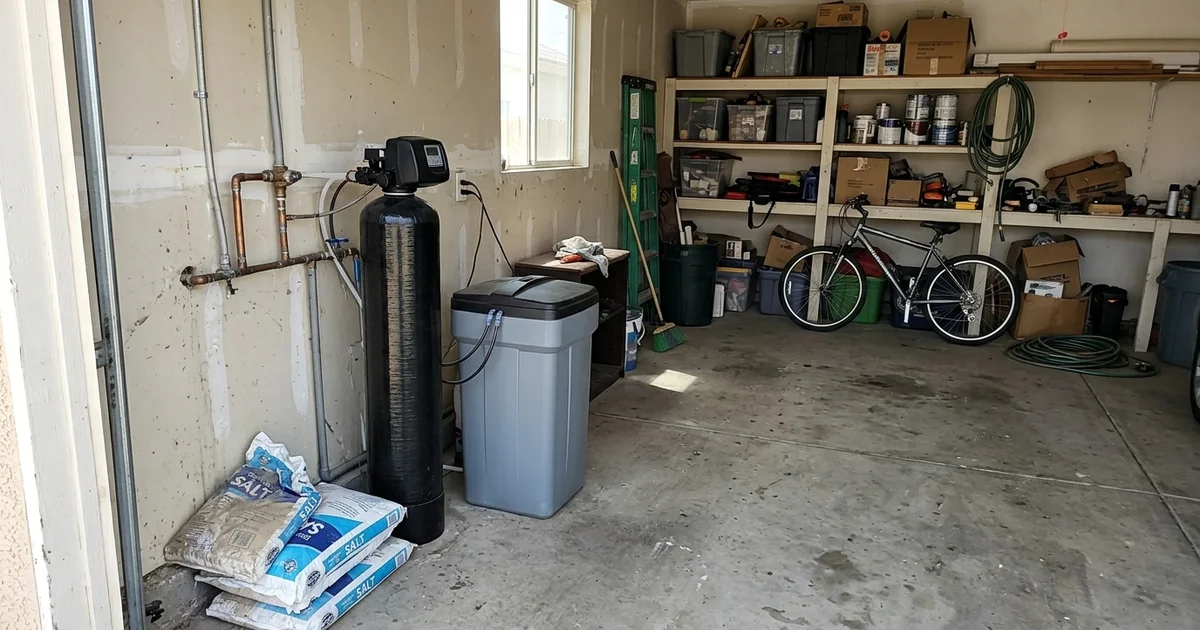
On moderately hard water, sizing a softener is less about protecting your plumbing from damage and more about getting what you paid for without wasting salt. The City of Prescott describes its water as moderately hard, averaging 4.3 to 7.6 grains per gallon. At that level, most Prescott homes need a smaller unit than the ones sold for very hard water regions, and some homes do not need one at all. This guide helps you see which group you are in.
First: should you be sizing a softener at all?
| Your situation | Recommendation |
|---|---|
| City water, no tankless heater, spotting does not bother you | Probably skip it; routine maintenance is enough |
| City water, you want softer-feeling water and fewer spots | Size one, using the formula below |
| City water, tankless heater and a busy household | Size one; it stretches descaling intervals |
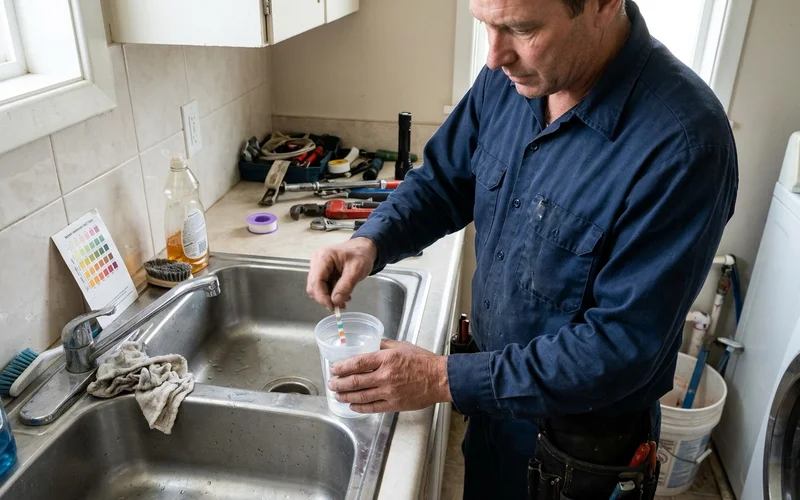
| Private well or another provider, untested | Test first; do not size from the city number |
| Inherited a softener with the house | Test the water and check its size and settings before replacing it |
If you landed in the first row, our guide on do you need a water softener covers that decision in more detail.
The formula
You need three numbers:
- People in the home × gallons per person per day = daily water use
- Daily water use × hardness in grains per gallon = grains removed per day
- Grains per day × days between regenerations = capacity needed, plus a margin
A common planning figure is about 75 gallons per person per day, though households vary. For hardness on city water, using the top of the range, 7.6, builds in a margin.
A worked example
A household of four on city water:
- 4 people × 75 gallons = 300 gallons a day
- 300 gallons × 7.6 grains = about 2,300 grains a day
- Regenerating about every 7 days = about 16,000 grains of usable capacity
Softeners do not deliver their full rated capacity at efficient salt settings, so this family usually lands on a unit rated around 24,000 to 32,000 grains.
Starting points by household
| Household | Approx. grains per day at 7.6 gpg | Common starting size |
|---|---|---|
| 1 to 2 people | 570 to 1,150 | Compact unit, about 16,000 to 24,000 grains |
| 3 to 4 people | 1,700 to 2,300 | 24,000 to 32,000 grains |
| 5 to 6 people | 2,850 to 3,400 | 32,000 to 40,000 grains |
| Large or high-use household | 3,800+ | 40,000+ grains |
| Cabin or second home, part-time | Varies with occupancy | Smallest practical unit, metered valve |
These are starting points. A tap test and an honest look at your water use come first.
Who should size up, and who can size down
Size up if:
- A tankless water heater sits downstream
- Long showers, frequent laundry, or a large family are normal
- Your tap tests above the city range, which is possible on some wells
Size down, or at least avoid oversizing, if:
- One or two people live in the home
- The house is a cabin or part-time home
- You travel often
What a wrong size looks like
| Undersized | Oversized | |
|---|---|---|
| Regeneration | Every night or more | Rarely |
| Hard water between cycles | Yes | No |
| Salt use | High | High per cycle, and wasteful |
| Resin life | Shortened | Resin sits idle and can degrade |
| Upfront cost | Lower, but false savings | Paid for capacity you never use |
Local expert insight
On moderately hard water, oversizing is the more common mistake. A unit built for very hard water regions can sit for weeks between regenerations here. Ask how the size was calculated, and make sure your actual hardness number was part of it.
Metered vs timer valves, and where to put the unit
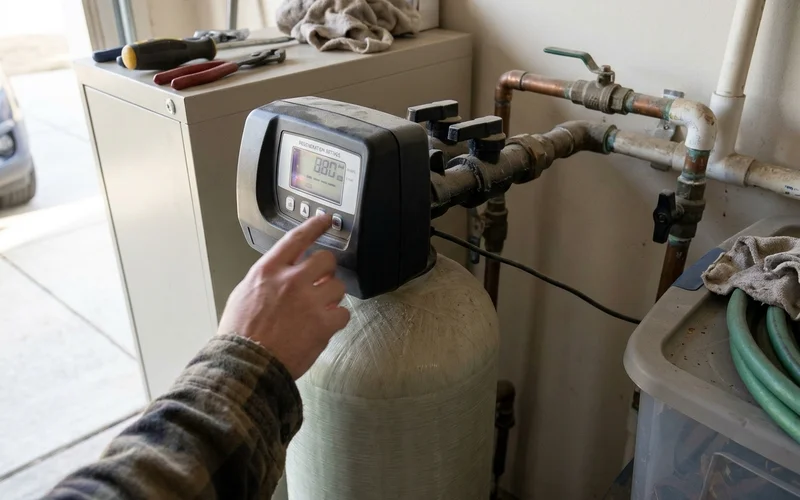
- Metered (demand) valves regenerate based on water actually used. They suit uneven use: guests, travel, and part-time homes.
- Timer valves regenerate on a fixed schedule regardless of use, which wastes salt in light weeks.
A metered valve is the better choice for most homes. Placement matters just as much in this climate: the resin tank, brine tank, and drain line all need to be somewhere that will not freeze, which rules out many garages and crawl spaces.
Our water softeners and reverse osmosis service sizes equipment from a test at your tap and a conversation about how your household uses water. Call Prescott Plumbing Pros any hour, in English or Spanish, for a free estimate. Ask about any service call fee before booking.