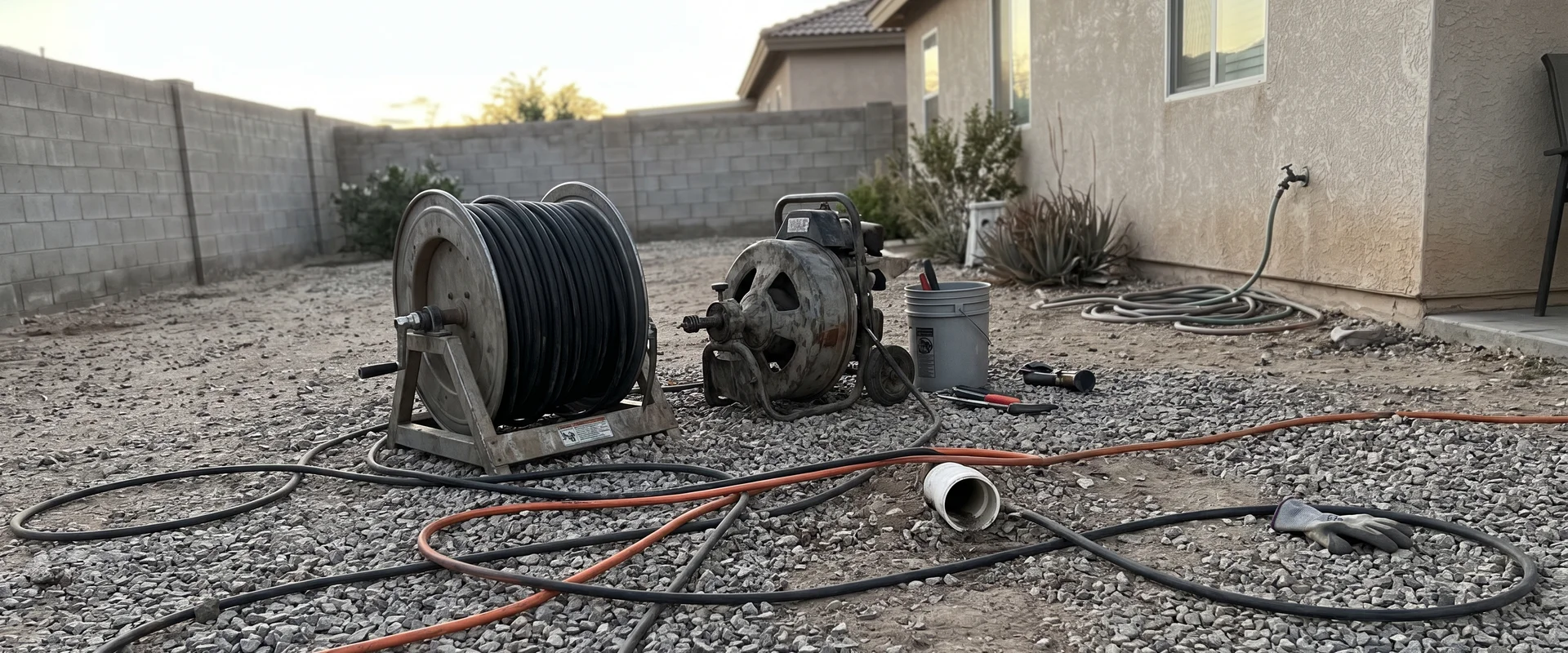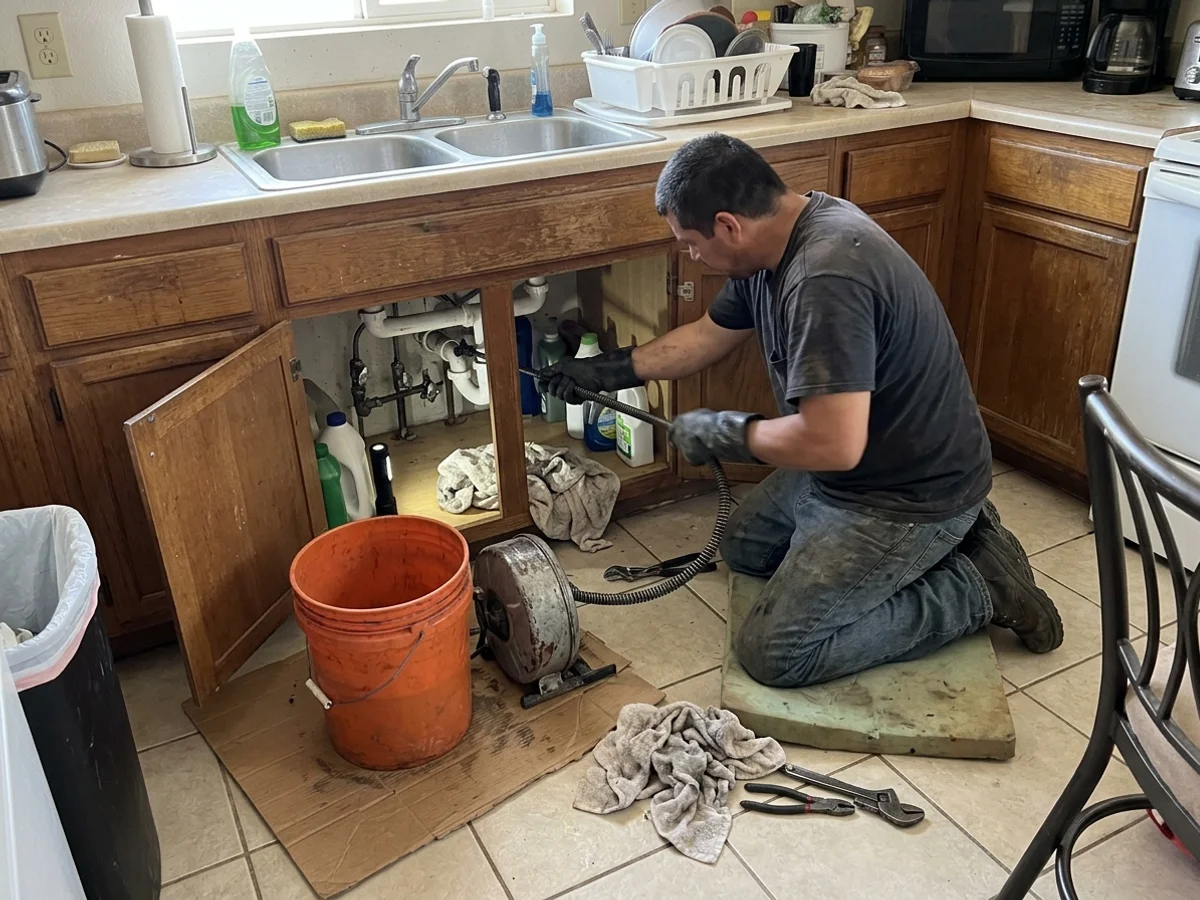
Drain cleaning in Prescott is really two jobs. The first is getting water moving again with the right tool. The second, which gets skipped far too often, is figuring out why the line closed. A kitchen sink that backs up once after a holiday dinner is one thing. A main line that backs up every spring is a pipe telling you it has a defect.
Prescott Plumbing Pros can connect you with a local plumber who clears the blockage and, when the pattern points to something bigger, runs a camera down the line so you can see what is actually there. Calls are answered 24/7 in English or Spanish.
Older Prescott Homes and the Lines Under Them
Housing age shapes drain problems here more than almost anything else. Many homes in central Prescott, especially the older blocks around the historic downtown, still drain through cast iron or clay pipe. Both materials have predictable ways of failing:
- Cast iron scales and corrodes from the inside. The rough interior catches grease and paper, and over time the bottom of the pipe can rot through or crack.
- Clay comes in short sections joined every few feet. Those joints loosen, and the mature trees common in older neighborhoods send roots into every gap they find.
- Settled and shifted sections show up where soil has moved, leaving low spots that hold water and sediment.
Newer subdivisions in Prescott Valley and Chino Valley use plastic drain pipe, which avoids most of this, but construction-era problems still turn up: a poorly sloped run, debris left in a line, or a joint that was never fully seated.
Winter Habits That Help Your Drains
Cold weather adds its own pressure. Traps and drain lines in unheated garages or crawl spaces can freeze, and a frozen drain behaves exactly like a clog. A few habits make a difference:
- Keep crawl space vents closed during hard freezes if your home has them, and make sure garage doors stay shut on cold nights.
- Run water in rarely used fixtures now and then so traps stay full, especially in a guest bath or basement.
- Go easy on grease during holiday cooking. Cold pipes make grease firm up faster.
- Before leaving a cabin for winter, ask about adding a safe antifreeze to the traps once the water is off and drained.
Reading the Symptoms Before Anyone Shows Up
Where the problem shows up tells the plumber which equipment to bring.
- One slow sink, tub, or shower. The clog is in that fixture’s trap or branch line. Hair and soap in baths, grease and food in kitchens.
- Several fixtures in one bathroom. A shared branch is narrowing where it ties into the main.
- Toilets gurgle when the washer drains. The line downstream cannot carry the flow, so air gets pulled through the traps.
- Water rises in a tub or floor drain when you flush. The main is blocked below everything. Stop using water and call at any hour.
Cabling, Jetting, and When Each One Makes Sense
Cabling sends a spinning steel cable with a cutting head through the pipe. It opens a blockage and restores flow, and for a straightforward clog that is enough.
Hydro jetting uses high-pressure water through a nozzle that scours the full inside of the pipe. It is the better tool when buildup coats the walls instead of plugging one spot. Grease, laundry lint and detergent sludge, light mineral deposits, and root masses at clay joints all respond better to jetting than to a cable. After jetting roots, the camera shows whether the joint itself needs repair.
Before jetting an old cast iron or clay line, a camera look comes first. A pipe that is already cracked or thin may need a gentler approach.
What the Sewer Camera Actually Shows
A self-leveling camera goes in through the cleanout and records as it travels. You watch the screen and see the pipe material, cracks, shifted joints, standing water, buildup, or roots.
The camera head carries a small transmitter called a sonde. A locator above ground picks up its signal, so the exact spot and depth of a problem gets marked with paint. If any digging is needed, it happens in one place. Sometimes the footage shows a healthy pipe and a one-time clog, and that is a useful answer too.
When Clearing Is Not Enough: Repair Paths
If the camera confirms a failed section, there are generally two options.
| Repair Method | Best For | Property Impact |
|---|---|---|
| Trenchless lining | Cracked or root-damaged pipe that still holds its shape | Minimal digging; driveways and landscaping stay intact |
| Excavation and replacement | Fully collapsed or badly offset lines | Trenching and surface restoration required |
A sound line with a temporary clog may only need a good jetting. Request a free estimate, ask about any service call fee before booking, and you will get a plain explanation of what fits. Our drain cleaning guides compare these approaches in more depth.
Shortcuts That Usually Backfire
- Chemical drain openers. They rarely clear a true blockage and leave caustic water in the trap. They are also hard on old cast iron.
- Running the disposal to push grease through. It just moves the grease further down the line.
- Clearing the same line again and again with no camera. You pay for the symptom several times over.
- Ignoring gurgling. It is often the first warning before a main line backup.
Drain clearing and camera inspection are available across Prescott, Prescott Valley, Chino Valley, Dewey-Humboldt, and Mayer. If sewage is coming into the house, call 928-555-0100 at any hour.