Some leaks announce themselves with a spray of water. The harder ones stay quiet: a pinhole in a copper line under the slab, a fitting weeping inside an exterior wall that froze two winters ago, a buried line cracked somewhere between the meter and the house. By the time a stain or soft spot appears, water may have been running for weeks.
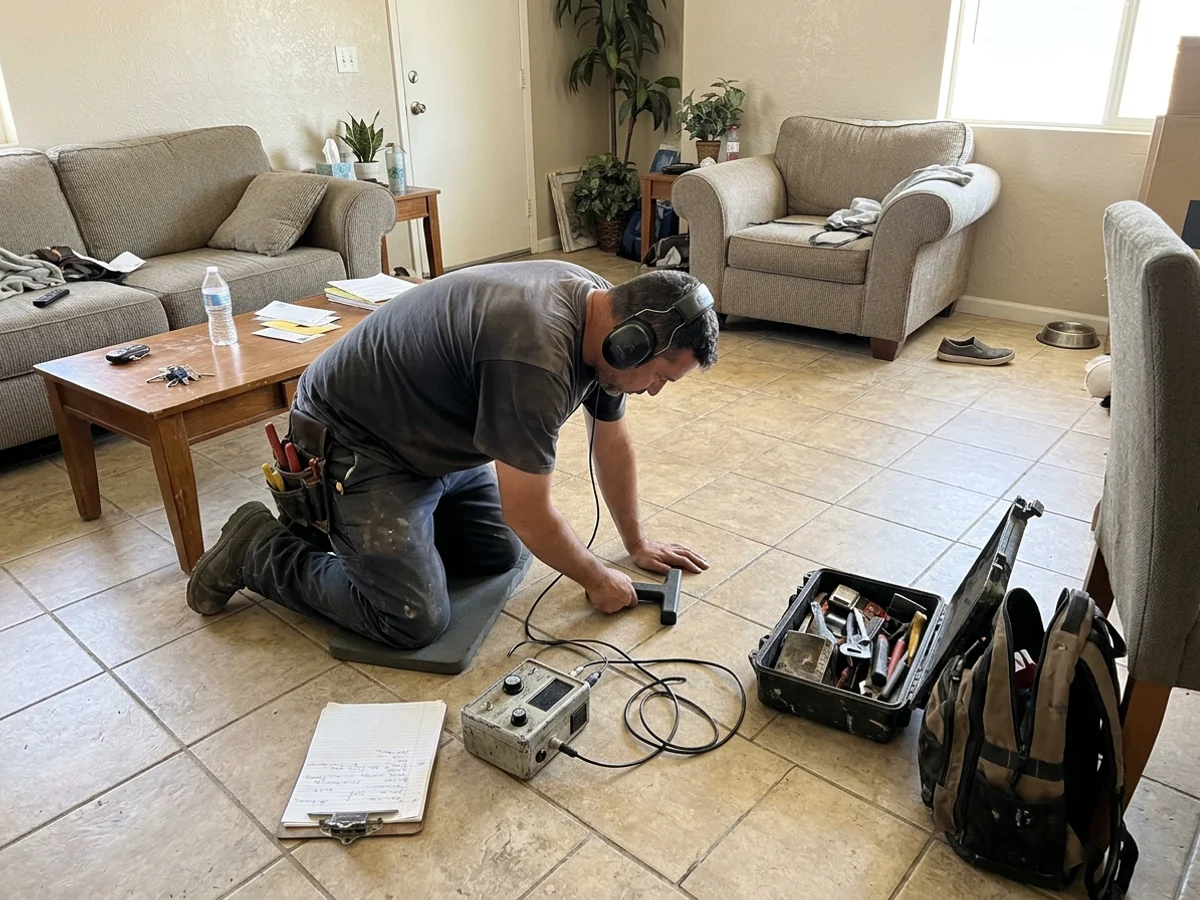
Slab leak repair in Prescott starts long before anyone cuts concrete. First comes confirming there is a leak, then finding exactly where it is with equipment built to avoid guesswork. Prescott Plumbing Pros can connect you with a local plumber for hidden leak location, slab leaks, sewer gas diagnostics, and whole-house repiping when patching stops making sense.
The Two-Minute Meter Test
Before calling anyone, you can check for a hidden leak yourself. Turn off every faucet, toilet, irrigation zone, and appliance that uses water. Then look at the water meter. Most meters have a small low-flow indicator, often a triangle or a little dial. If it is turning with everything off, water is going somewhere.
Other clues worth paying attention to:
- A water bill that jumped without any change in your household’s habits.
- A warm spot on a tile floor, which often means a hot water line is leaking under the slab.
- Running water sounds when nothing is on.
- Damp patches at the base of a wall, along baseboards, or in the crawl space.
Where Winter Hides Leaks
Freezing weather is the leading cause of hidden leaks in this area, and the damage is not always immediate. At about 5,300 feet, Prescott gets hard overnight freezes most winters. When water in a pipe freezes, it expands and can crack the pipe or loosen a fitting. Sometimes that pipe sprays the moment it thaws. Other times it seeps slowly inside a wall or under a crawl space, and nobody knows until the drywall stains or the floor turns spongy.
The usual locations are predictable:
- Supply lines running through exterior walls, especially on the north side of the house.
- Pipes in unheated crawl spaces and garages.
- Outdoor spigots and hose bibs, where a cracked line inside the wall can leak every time the spigot is used.
- Cabins and second homes where the heat failed or was set too low while nobody was there.
If you had a frozen pipe last winter and never had the line checked, a pressure test is a cheap way to find out whether it left a crack behind.
How a Leak Gets Located Without Demolition
Once a leak is confirmed, a pressure test separates supply-side from drain-side problems. Then the locating begins.
| Detection Method | How It Works | Best Used For |
|---|---|---|
| Acoustic listening | Amplifies the sound of pressurized water escaping | Leaks under concrete slabs |
| Thermal imaging | Shows small surface temperature changes | Hot water leaks under hard flooring |
| Electromagnetic tracing | Follows a signal along a metal pipe | Mapping line routes before any cut |
Concrete or drywall gets opened at the located spot and nowhere else. One small access cut is a very different job from tearing out a whole hallway of tile.
Aging Pipe in Older Homes
Housing age matters as much as weather. Many older homes in central Prescott still run on galvanized steel supply pipe. Galvanized corrodes from the inside, the buildup narrows the pipe, and pressure drops at every fixture. Eventually the thinned walls start to leak, often at threaded joints. Older copper can also develop pinholes over time.
Newer subdivisions, including many in Chino Valley, avoid most of this, but construction-era defects still show up: a fitting that was never fully crimped, a line nicked during framing, or a run left too close to an exterior wall.
Spot Repair, Reroute, or Repipe
There are three realistic paths, and each one fits a different situation.
- Spot repair: Open the slab or wall at the located point and fix the section. Best for a single leak in an otherwise sound line.
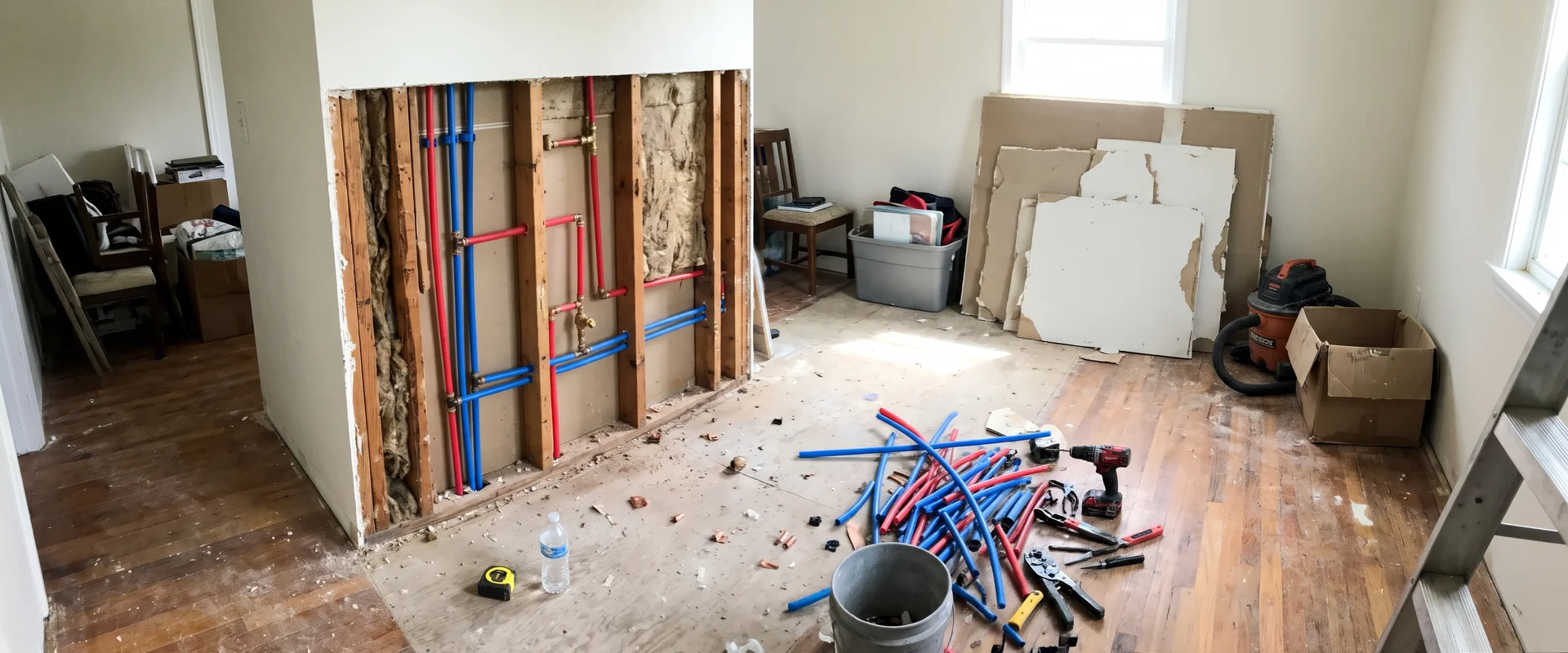
- Reroute: Abandon the leaking run and install a new line through the attic or walls. Often the better value when that line has leaked before.
- Whole-house repipe: Replace the supply system. Right when pressure is low everywhere, water runs rusty on the first draw, or pinholes keep appearing in different rooms.
| Piping Material | Strengths | Good Fit For |
|---|---|---|
| PEX | Flexible, fewer wall openings, handles freeze cycles better than rigid pipe | Most whole-house repipes |
| Copper | Rigid, long service history | Exposed runs and layouts suited to rigid pipe |
Ask whether a permit is required for your project. After any repair, the system gets pressure tested and the meter rechecked before walls or floors are closed.
Tracking Down a Sewer Gas Smell
A persistent sewage smell means gas from the drain system is reaching your living space. There is usually no puddle to follow, which makes it frustrating to find.
Smoke testing solves that. Non-toxic fog is pushed through the drain and vent system at low pressure, and it comes out wherever the system is open. In one pass it can reveal:
- Dry P-traps in guest baths, basements, or homes that sat empty
- Unsealed vent penetrations behind drywall
- Cracked drain lines inside wall cavities
- Failed toilet wax rings or broken closet flanges
Leak detection, smoke testing, and repiping are available across Prescott, Prescott Valley, Chino Valley, Dewey-Humboldt, and Mayer. Our leak and repiping guides go deeper on telling these situations apart, and you can request a free estimate any time.