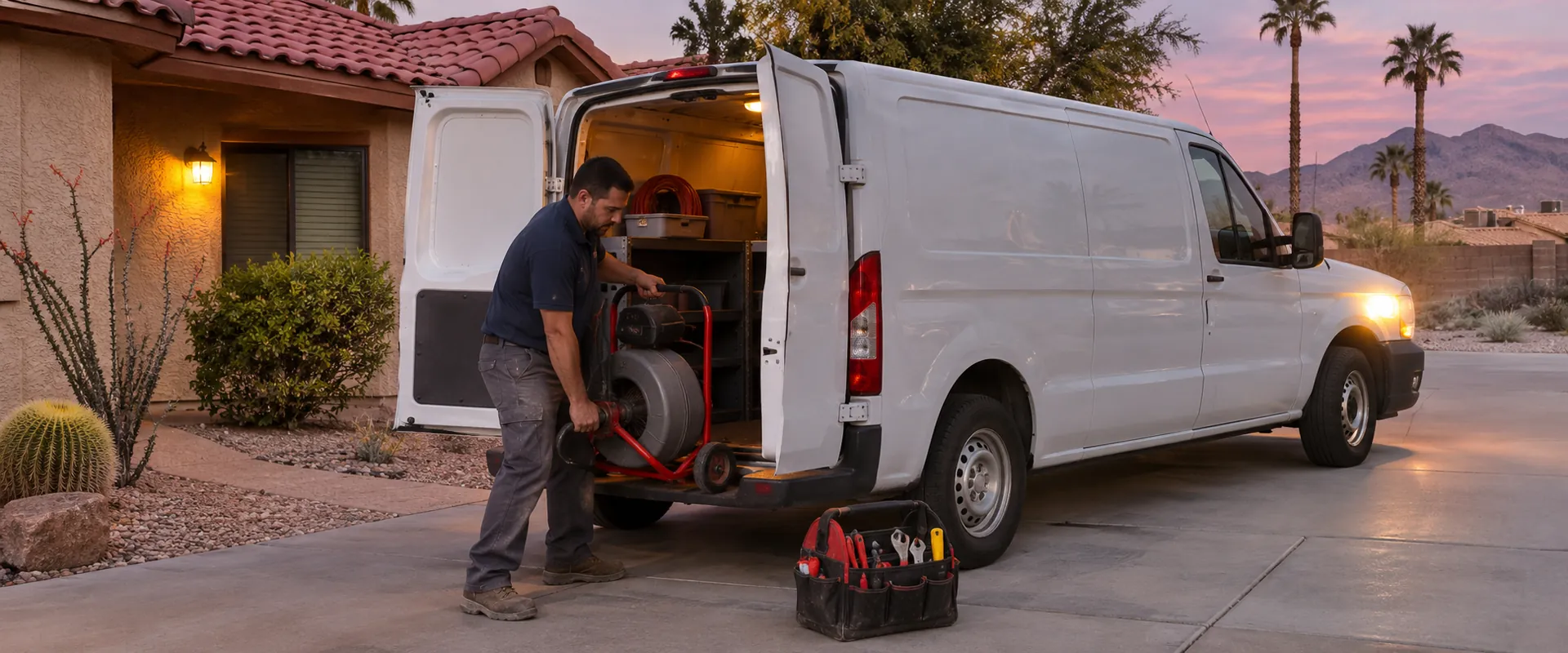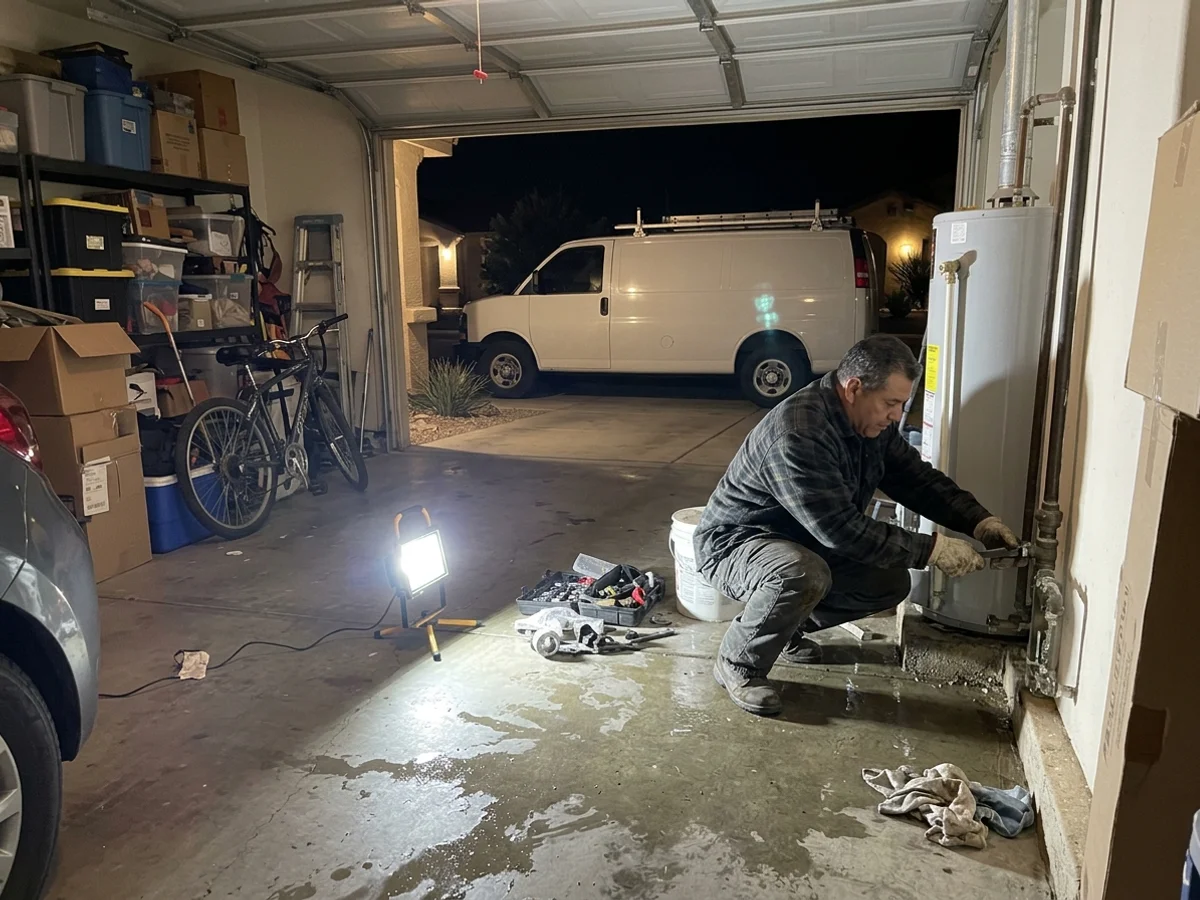
The worst plumbing calls in a mountain town tend to arrive on the coldest nights. The thermometer drops into the teens, a supply line in an exterior wall freezes, and a few hours later it splits. Or the ice in a garage pipe lets go at sunrise and water starts running across the floor. When you need an emergency plumber in Prescott, the first thing you need is for the phone to be picked up.
That is the whole idea behind this line. Your call is answered at any hour by an automated bilingual assistant, in English or Spanish. It writes down what is happening and routes the details to a local plumber. Nobody gets sent to voicemail, and nothing sits in a queue until the office opens. Here is what to do before and after you call Prescott Plumbing Pros.
The First Five Minutes Decide How Bad It Gets
Most of the damage in a plumbing emergency depends on how long water keeps flowing. A split half-inch line under full pressure can move several gallons a minute. Closing the right valve quickly does more good than anything that happens later.
- Go straight to the main shutoff. In local homes it is usually in the garage where the line enters, in a crawl space near the foundation, in a utility closet, or at the meter box near the street.
- Turn it the right way. A ball valve takes a quarter turn so the handle sits across the pipe. A gate valve takes several turns clockwise. If it will not budge, stop. Forcing an old valve can snap it.
- Make the area electrically safe. Shut off breakers for outlets and appliances near the water before you walk into it.
- Drain what is left. Open the lowest faucet in the house to relieve pressure in the lines.
- Deal with the water heater if it is involved. Close the cold supply on top and turn off the gas or the breaker.
Then call and say the main is closed. A house that is already shut off gets handled differently from one that is still flooding. If you are not sure where your valve is, our guide to shutting off your water is worth reading before the first hard freeze, not during it.
Frozen Pipes: Why Winter Fills the After-Hours Schedule
At about 5,300 feet, this is not desert plumbing. Prescott sees real winters, hard overnight freezes, and the occasional snow, and those conditions drive a large share of urgent calls.
Pipes freeze where they are exposed: crawl spaces, garages, exterior walls, and outdoor spigots and hose bibs. Water expands as it turns to ice, and the pressure splits the pipe or a fitting. The leak often does not show until the thaw, which is why a burst pipe so often appears mid-morning after a cold night.
If a faucet only trickles on a frozen morning, close the main before trying to warm anything. Open the faucet on that line so melting ice has somewhere to go. Never use an open flame on a pipe. If you cannot see the frozen section, or you find a crack, call.
Cabins and second homes
Part-year homes and cabins in the pines are the hardest cases. If the heat fails while nobody is there, lines can freeze and burst and run for days unnoticed. Owners who are out of town can call, describe what a neighbor or property manager sees, and give a local contact for access. Closing the main before you leave for any stretch in winter is the single best protection.
Tonight or Tomorrow? A Quick Way to Decide
| What You Are Seeing | Call Now? | Reason |
|---|---|---|
| A frozen pipe, or one that has burst | Yes | Splits leak hard once the ice melts |
| Sewage rising in a tub, shower, or floor drain | Yes | The main line is blocked below every fixture |
| No water anywhere in the house | Yes | A frozen service line, failed valve, or a break on your side |
| Strong sewer gas smell indoors | Yes | Gas is reaching the living space |
| Water heater leaking or the relief valve running nonstop | Yes | A failing tank can empty onto the floor |
| One slow drain, a drip, or a running toilet | Usually not | Fine to book for daytime |
When in doubt, call anyway. Describing the problem takes a couple of minutes, and you will know whether it needs attention tonight.
Other Urgent Calls Common in the Area
Main line backups in older central neighborhoods
Many older homes near downtown Prescott still drain through cast iron or clay lines. Roots work into the joints, cast iron scales and cracks, and when the main closes every drain backs up at once, usually through the lowest fixture. Stop running water and call.
Seized shutoffs and lost water pressure
Valves that have not been turned in a decade often refuse to move when you need them. Losing water to the whole house can also come from a frozen service line or a failed pressure regulator. A stuck valve is usually replaced with a quarter-turn ball valve so the next shutoff works.
Water heaters on cold incoming water
Winter supply water arrives much colder, so tank heaters run longer and harder. A tank already weakened by sediment can start leaking during a cold stretch, and that is not something to leave until Monday.
What to Ask Before Anyone Starts Work
Emergencies are stressful enough without surprises. Request a free estimate, and ask about any service call or after-hours fee on the phone before booking. It is also fair to ask what will be done first to stop the damage, and whether the permanent repair can be scheduled once things are stable. Arizona homeowners can look up any contractor through the Arizona Registrar of Contractors before work begins.
Emergency calls are routed across Prescott, Prescott Valley, Chino Valley, Dewey-Humboldt, and Mayer. If water is running right now, close the main and call 928-555-0100.