Three kinds of water treatment get sold side by side, and they are easy to mix up. Each one fixes a different problem. Buy the wrong one and the issue that sent you shopping is still there. Here is how to match the equipment to what you are actually noticing at home.
Start with the symptom, not the equipment
| What you notice | The real problem | The system that addresses it |
|---|---|---|
| Spots on glass and fixtures, dry-feeling skin, soap that will not lather | Hardness | Softener (optional on city water) |
| Water tastes flat or off; you buy bottled water | Dissolved solids, taste | Reverse osmosis at the kitchen tap |
| Grit in aerators, cloudy water after utility work, chlorine smell | Sediment, chlorine | Whole-house filtration |
| Rusty water in an older home | Often aging galvanized pipe | None of these. Look at the pipes first. |
| Several of the above | More than one problem | A combination, installed in the right order |
That fourth row matters in older central Prescott homes. Rust-tinted water is often a piping issue, and no treatment system fixes corroded pipe.
What each system really is
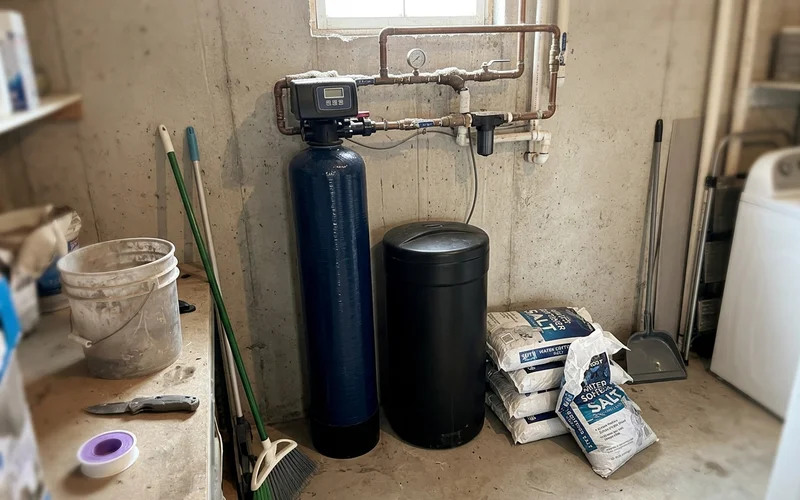
Softener (ion exchange). Installed where water enters the house. Resin beads trade calcium and magnesium for sodium and regenerate with brine. It is the only one of the three that reduces hardness throughout the house.
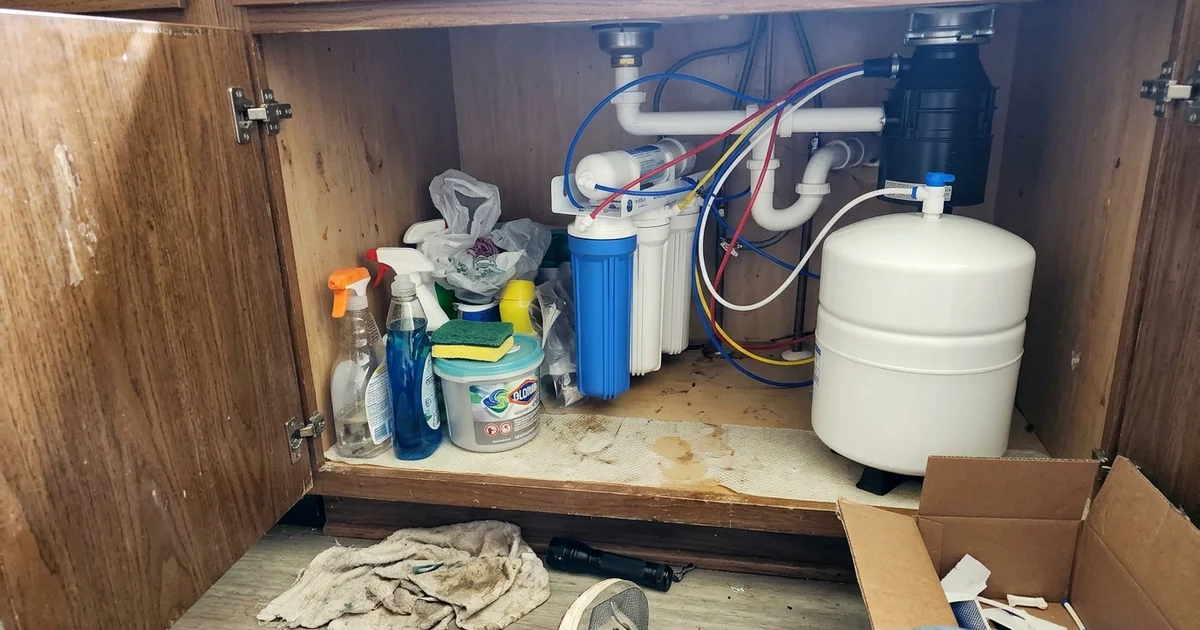
Reverse osmosis (RO). Usually under the kitchen sink with its own faucet. Water is pushed through a fine membrane that rejects most dissolved solids, and clean water fills a small storage tank. It is excellent for drinking and cooking, and does nothing for the rest of the house.
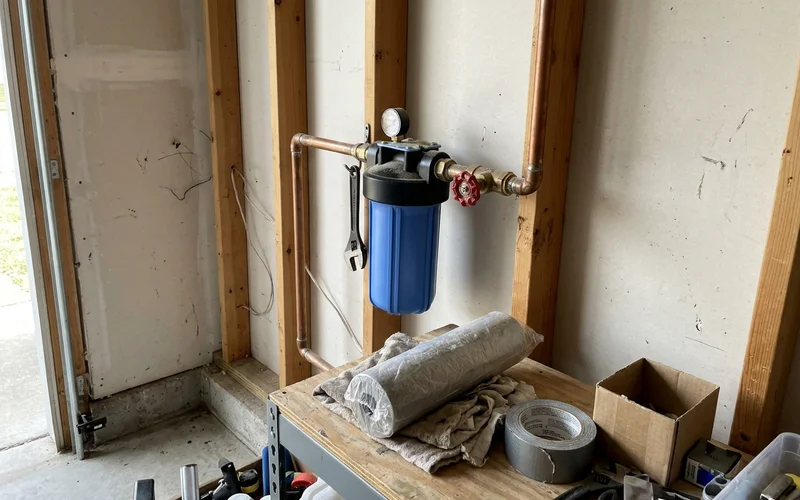
Whole-house filtration. Cartridge housings on the main line with sediment and carbon media. It cuts grit, chlorine taste, and odor at every fixture, but leaves hardness alone.
Side-by-side comparison
| Criteria | Softener | Reverse osmosis | Whole-house filter |
|---|---|---|---|
| Removes hardness | Yes, whole house | Yes, one tap only | No |
| Reduces water heater sediment | Yes | No | No |
| Improves drinking taste | A little | A lot | Some |
| Where it treats | Whole house | One tap | Whole house |
| Main upkeep | Salt refills | Filter changes; membrane every few years | Cartridge changes every several months |
| Needs a drain | Yes | Yes, small | No |
| Freeze concern | Must stay in heated space | Usually inside a cabinet, low risk | Must stay in heated space |
How the local water changes the answer
The City of Prescott describes its water as moderately hard, averaging 4.3 to 7.6 grains per gallon. At that level, a softener is a comfort and appliance-life choice rather than a must. That shifts the usual advice. In very hard water regions, the softener comes first. Here, many households get the most value from an RO tap for drinking water, plus routine maintenance like a yearly water heater flush.
Private wells are the exception. Wells and other providers in the area can be harder, or carry iron or sediment, so testing at the tap comes before any purchase.
Local expert insight
Whatever you choose, plan where it goes before you buy. Softeners and whole-house filters on the main line need a spot that never freezes. In homes where the main enters through an unheated garage or crawl space, that one detail can decide the whole project.
Installing more than one: order matters
- Sediment filter first, if you have one. Grit shortens the life of everything downstream.
- Softener next, on the main line.
- RO last, under the sink. Feeding it softened water extends the membrane’s life.
Leave outdoor spigots and irrigation on untreated water. There is no reason to spend salt or filter cartridges on the yard.
Common mix-ups
- “I have a softener but the water tastes bad.” You need an RO tap, not a bigger softener.
- “I have RO but there are spots on the shower glass.” RO only treats one tap.
- “I have a filter but there is still crust on the faucets.” Filters do not remove hardness.
- “My water is rusty.” Check the pipes before buying treatment.
For the softener side of the decision, our guide on salt-based vs salt-free compares the two main options. Every water softeners and reverse osmosis visit should start with testing your tap and asking what made you call. Prescott Plumbing Pros answers 24/7 in English and Spanish. Request a free estimate and ask about any service call fee before booking.