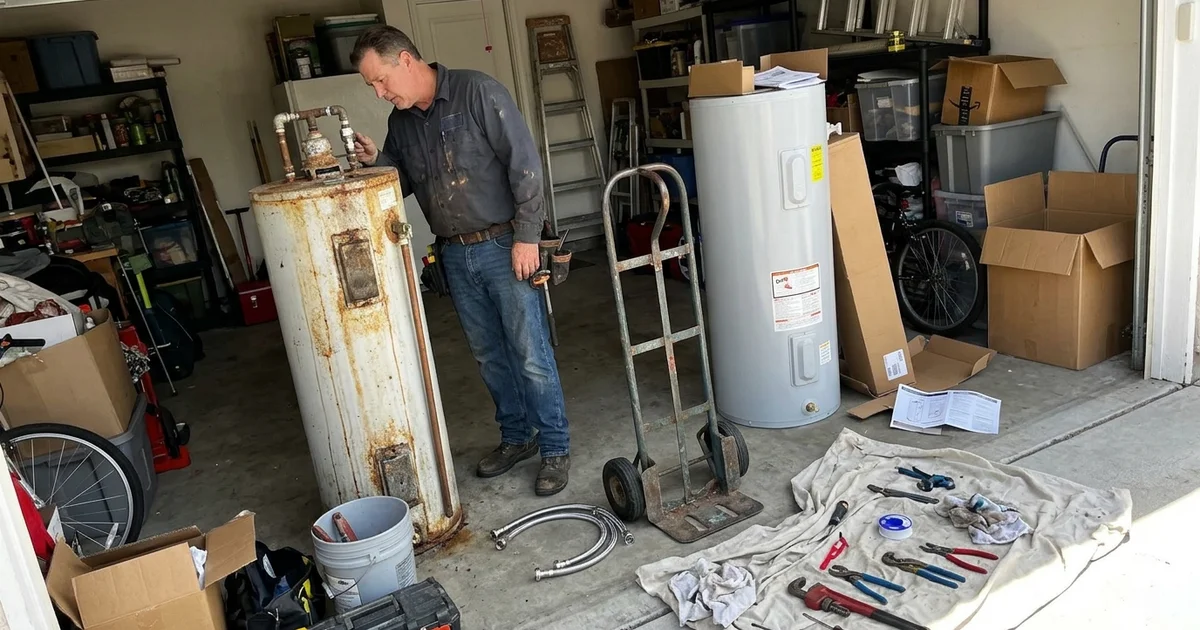
When a water heater starts acting up, the decision comes down to one thing: is the tank failing, or is something attached to it failing? Once you know which, most cases answer themselves. The close calls are where local conditions, especially long, cold winters, tip the balance.
The one rule to remember
The tank is the part you cannot fix. A leak through the steel, or rust coming from inside, means the unit is done. Everything bolted to the tank, from thermostats and elements to gas controls, relief valves, and dip tubes, can be replaced, as long as the tank has life left.
Repair or replace: side by side
| Factor | Points to repair | Points to replace |
|---|---|---|
| Where the problem is | A part on the tank | The tank itself |
| Age vs rated life | Well within it | At or past it |
| Hot water color | Clear | Rusty on the hot side only |
| Sediment | Light; drains with a flush | Heavy; drain valve clogs |
| Repair history | First issue | Two or more significant repairs in a year |
| Size for the household | Keeps up, even in winter | Always runs short in cold months |
| Cost of the fix | Small share of a new unit | Approaching half or more of a new installed unit |
Symptom by symptom
| Symptom | Usually | Why |
|---|---|---|
| Water leaking from the tank shell or bottom seam | Replace | Corroded-through steel cannot be patched |
| Rust in hot water only, older tank | Replace soon | Internal corrosion; anode likely gone |
| No hot water, no leak (gas) | Repair | Pilot, thermocouple, or gas control |
| No hot water, no leak (electric) | Repair | Element, thermostat, or high-limit switch |
| Lukewarm water, electric | Repair | Often a failed lower element |
| Runs out fast on a younger tank | Repair | Broken dip tube, or sediment a flush can clear |
| Dripping relief valve | Repair | Failed valve or high pressure; may need an expansion tank |
| Popping, no other symptoms | Flush and reassess | Sediment on the bottom |
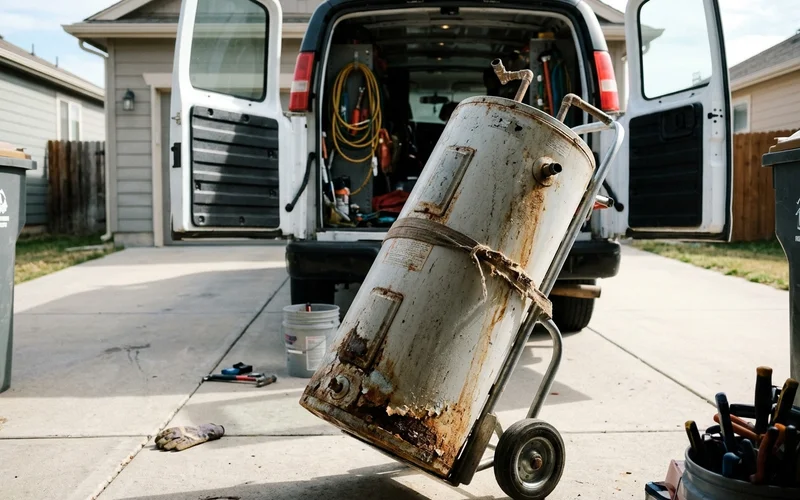
The 50 percent rule, adjusted for a cold climate
A common rule of thumb: if a repair approaches half the cost of a new installed heater, replace instead. It is a reasonable start. Two local adjustments make it more useful.
1. Weigh remaining life, not just age. A repair on a tank with years left is an investment. The same repair on a tank near the end is a down payment on a replacement you will need soon anyway.
2. Factor in winter. In Prescott, incoming water is cold for months, and the heater runs longer cycles to keep up. An older tank that is borderline in October is the one most likely to fail in January, which is the worst time to be without hot water, and often a busy time to get help.
Water quality is a smaller factor here
The City of Prescott describes its water as moderately hard, so sediment builds slowly. Hardness alone rarely kills tanks here early, though an unflushed tank still collects sediment over the years. Homes on private wells can be different, and an older tank on untested well water deserves a closer look.
Local expert insight
A planned replacement happens on a weekday, with the unit you chose and any permit arranged. An emergency replacement happens after the tank has emptied onto the garage floor during a cold snap. When a tank is clearly near the end, choosing your own timing is worth a lot.
What a good inspection checks
- Age from the data plate
- Sediment, by draining a little water and looking at it
- Anode condition, if accessible
- Corrosion at fittings, the relief valve, and the bottom seam
- Relief valve and expansion tank, including system pressure
- Venting and combustion air on gas units
- The original install: connections, drain pan, strapping, and whether the unit sits somewhere it could freeze
You should hear both options explained, with reasons. A recommendation with no explanation is not a diagnosis.
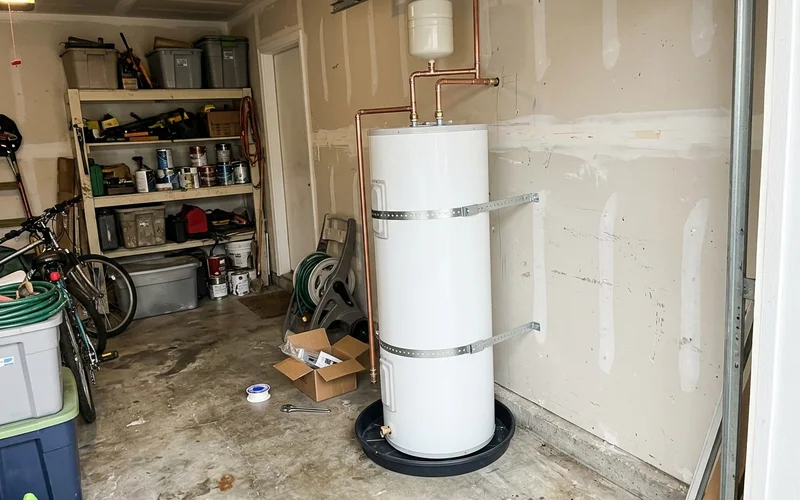
If you are replacing
- Size it for winter, not summer. A tank that barely keeps up in July will fall short in January. Our guide on tank vs tankless covers sizing for cold inlet water.
- Ask about permits. Gas units and venting changes commonly need one.
- Plan maintenance. A yearly flush and periodic anode checks are what get a new tank to its rated life.
Our water heater repair and replacement service handles gas, electric, and tankless units. Call Prescott Plumbing Pros at any hour, in English or Spanish. Tell the assistant the heater’s age, fuel type, and what it is doing. Request a free estimate and ask about any service call fee before booking.