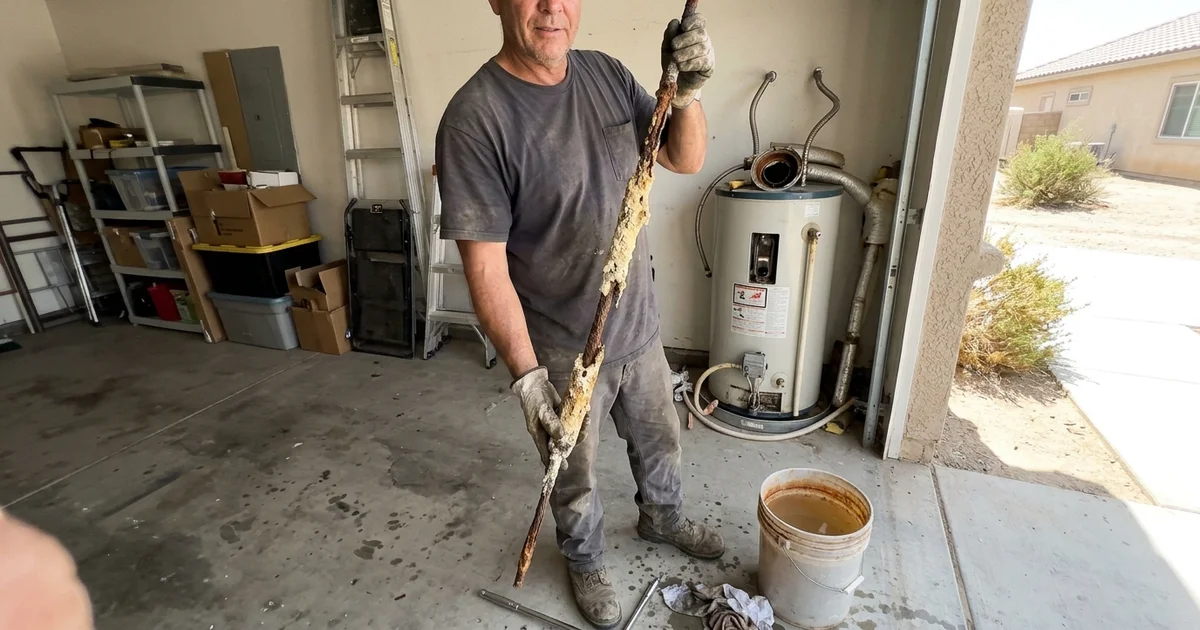
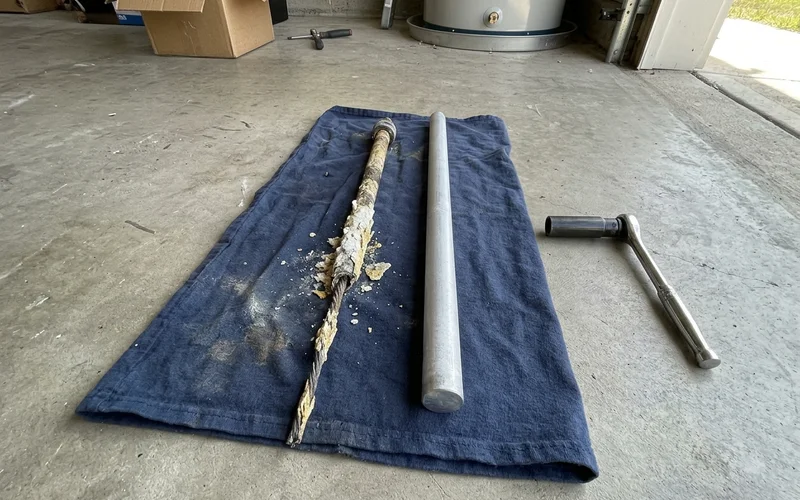
Most people never think about the part that has the biggest say in how long their water heater lasts. It is a metal rod, roughly three to four feet long, threaded into the top of the tank and hanging in the water. Its only job is to corrode so the tank does not. Whether replacing it is worth your money depends on the age of the tank, what kind of water you are on, and what the rod looks like when it comes out.
This guide is for the moment you have to choose: put in a new rod, leave things alone, or start planning a replacement.
Start here: three questions that settle most cases
| Question | If yes | If no |
|---|---|---|
| Is water leaking from the tank shell or the bottom seam? | Stop. No rod can save a tank that has corroded through. Plan a replacement. | Go to the next question. |
| Does the hot water come out rusty while the cold runs clear? | The rod is probably gone and the steel is rusting. On a younger tank a new rod may slow it; on an older one, plan ahead. | Good sign. Keep going. |
| Is the heater still well inside its rated life? | A rod check, and a new rod if needed, is usually money well spent. | The payoff shrinks. Have the rod and the sediment looked at together before deciding. |
If you made it through all three with a “no, no, yes,” you are in the best position to benefit from a new rod.
How long a rod lasts on Prescott water
The City of Prescott describes its water as moderately hard, averaging 75 to 130 ppm, or about 4.3 to 7.6 grains per gallon. That is good news for anodes. Mineral-heavy water conducts current better and eats rods faster, so homes on city water here generally get more years from a factory rod than homes in very hard water regions.
Three things can shorten that life:
- A water softener. Softened water is more aggressive toward the rod. The trade is worth it for some households, but check the rod sooner.
- Private wells. Homes on wells or other providers outside the city system can have very different water. Test at the tap and pull the rod earlier the first time.
- Heavy winter use. Incoming water is cold for months, so the heater runs longer cycles to reach temperature. More hot water through the tank means more work for the rod.
Picking the replacement
| Rod type | Best fit | Trade-off |
|---|---|---|
| Magnesium | Most city water homes, strongest protection | Can cause sulfur odor on some well water |
| Aluminum-zinc | Well water with a rotten-egg smell on the hot side | Slightly gentler protection |
| Powered (impressed current) | Owners who never want to check a rod again, or odor that will not go away | Needs an outlet nearby and costs more up front |
For a typical home on city water, magnesium is a reasonable default. If you are on a well and the hot water smells, start with aluminum-zinc or a powered rod.
Why the job usually is not a quick Saturday fix
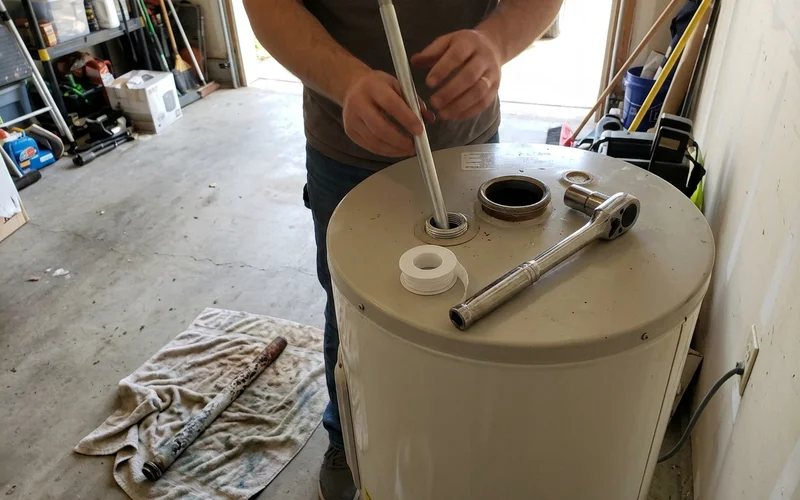
Nothing on the outside of the tank tells you how much rod is left. It has to come out. That means turning off the gas or power, closing the cold inlet, draining some water, and breaking loose a hex head that may have been sitting in place for years. Rods often seize, and leaning on a tank with a long breaker bar can damage the fittings at the top. Water heaters tucked into closets or under low garage ceilings add another problem: a rigid rod may not come straight out. Segmented, flexible rods exist for exactly that situation.
Local expert insight
Pair the rod check with a tank flush. Sediment from moderately hard water builds slowly, but it does build, and seeing both the rod and what drains out of the tank gives a much clearer picture of how much life the heater has left.
Rod or new tank: how the decision usually lands
- Tank under about two-thirds of its rated life, no leaks, clear hot water: replace the rod if it is worn. Strong value.
- Tank near the end of its rated life, some sediment, no leaks: a rod can still help, but budget for replacement in the next few years.
- Rusty hot water or moisture from the tank: skip the rod and plan the replacement, ideally before a cold snap when the heater is working its hardest.
You can request a free estimate that covers a flush and rod check together, and ask about any service call fee before booking. When you call Prescott Plumbing Pros, the bilingual assistant notes the heater’s age, fuel type, and any odor so the plumber arrives with a rod that fits. Rod checks are part of our water heater service, and our guide on why water heaters work harder in winter covers the bigger picture.