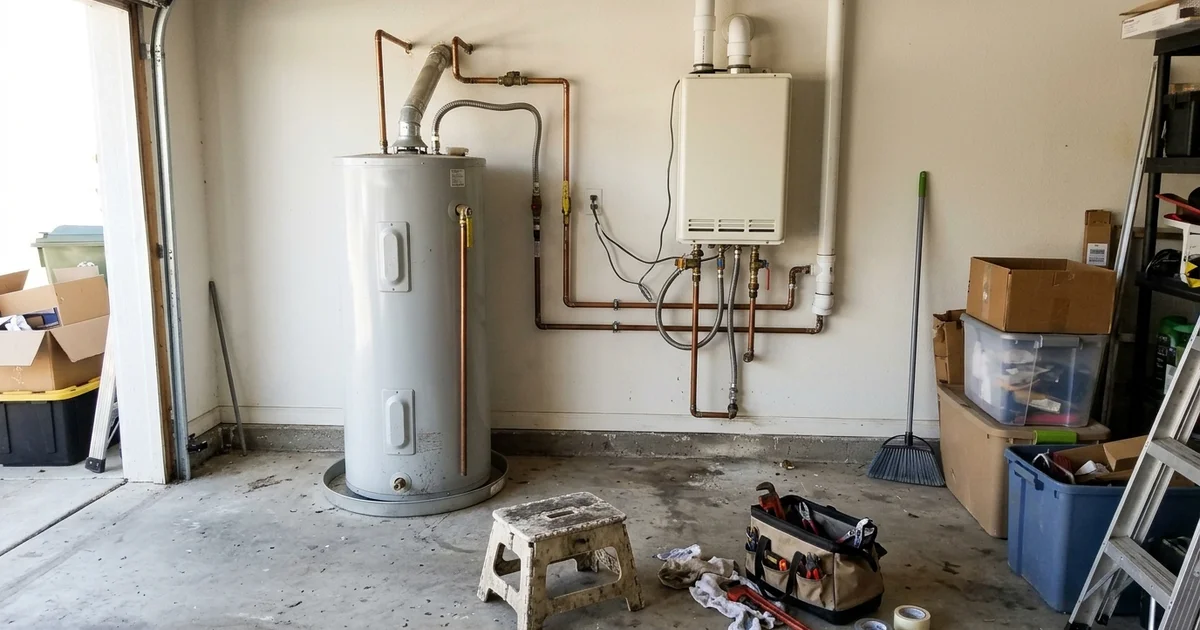
Most tank-versus-tankless comparisons focus on upfront cost and endless hot water. In Prescott, one more factor shapes the answer: winter. When incoming water is cold for months, both types have to work harder, and they struggle in different ways. Choosing between them is partly about which winter weakness you would rather manage.
How cold inlet water affects each type
A tank stores a set volume of heated water. When cold water refills it, the burner or elements have to bring that water further up to temperature, so recovery takes longer in winter. Back-to-back showers that worked fine in summer can run the tank dry in January.
A tankless unit heats water as it flows. Its output depends on the temperature rise, the gap between incoming and outgoing water. A bigger rise means fewer gallons per minute. A unit that easily runs two showers in August may only manage one comfortably on a frigid morning.
Neither problem is a deal-breaker. Both come down to sizing for the coldest months, not the average.
Side by side
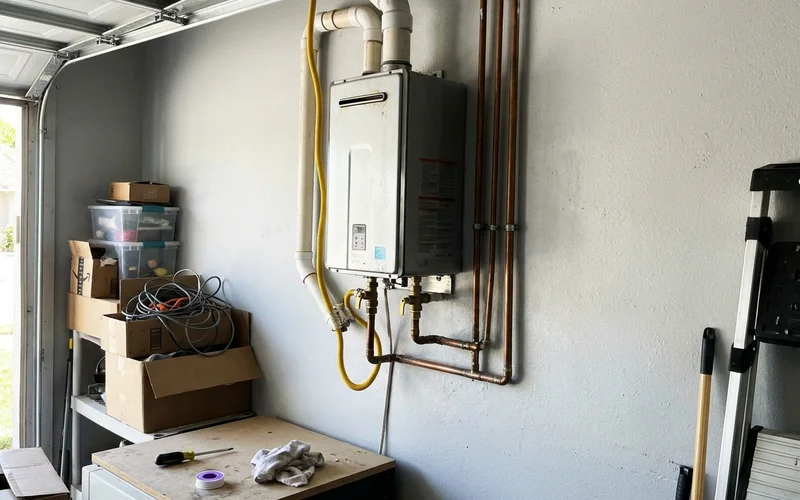
| Criteria | Tank | Tankless |
|---|---|---|
| Upfront equipment and install | Lower | Higher, often more if gas line or venting needs upgrading |
| Install complexity on a swap | Usually straightforward | May need a larger gas line, new venting, and electrical work |
| Standby energy loss | Some, keeping the tank hot | Minimal, heats on demand |
| Winter performance | Slower recovery | Lower flow at a large temperature rise |
| Hot water supply | Limited by tank size and recovery | Continuous at the rated flow |
| Maintenance on moderately hard water | Yearly flush, periodic anode check | Periodic descaling, inlet screen cleaning |
| Elevation | Gas units should match manufacturer guidance for altitude | Check high-altitude settings or models |
| Freeze exposure | Tank in an unheated space can freeze when drained or idle | Exterior-mounted units need freeze protection and power |
| Typical failure | Tank leak | Heat exchanger problems, error codes |
| Space | Floor space | Wall-mounted |
Elevation and freeze details that matter here
Altitude. At about 5,300 feet, gas appliances operate in thinner air. Many manufacturers specify settings or models for higher elevations. Ask the installer to confirm the unit is set up for the altitude, tank or tankless.
Freeze protection. Tankless units often include built-in freeze protection that depends on electricity. In a power outage during a cold snap, an exterior or garage-mounted unit can freeze. If the house might sit empty, the unit needs to be drained or protected.
Local expert insight
A common tankless complaint in cold climates is not reliability. It is a unit that was sized for a warm-weather temperature rise and cannot keep up in winter. Ask how the size was calculated, and make sure winter inlet temperatures were part of it.
A decision checklist
Choose a tank if most of these are true:
- You want the simplest, most forgiving setup.
- One or two people live in the home, or it is a cabin used part of the year.
- The current setup is a straight swap and you need hot water back quickly.
- You may sell within a few years.
- You want hot water during a power outage (with a gas tank that does not rely on power).
Choose tankless if most of these are true:
- Several people take back-to-back showers.
- You plan to stay many years.
- You will keep up with descaling.
- The gas line and venting can support it, or you are willing to upgrade.
- You want the floor space back.
Sizing, briefly
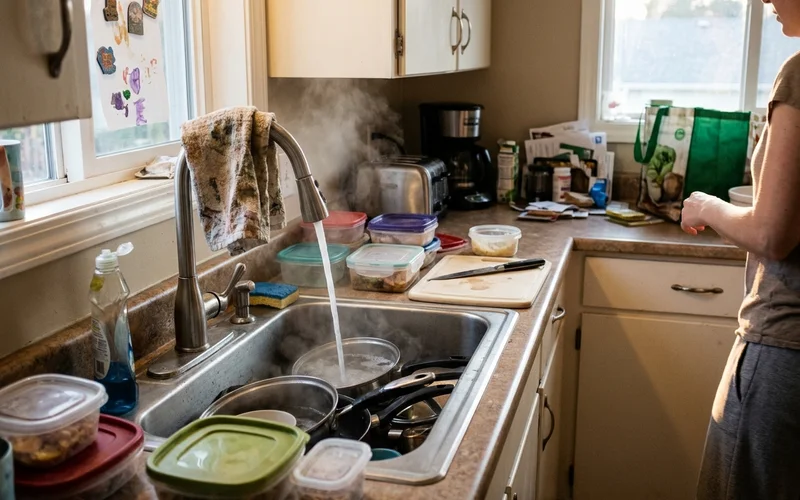
- Tank: look at your busiest winter hour. Two showers plus a dishwasher on a cold morning sets the demand, and tank size plus recovery rate has to cover it.
- Tankless: add up the gallons per minute of fixtures likely to run at once, then match it to the unit’s output at your winter temperature rise, not the summer one.
Maintenance on local water
The City of Prescott describes its water as moderately hard, so scale builds slowly. Tanks still benefit from a yearly flush, and tankless units still need periodic descaling. See our tankless descaling schedule for realistic intervals.
Permits and the visit
Converting to tankless may involve gas and venting changes, and water heater replacement often requires a permit. Ask whether the permit and any upgrades are in the estimate. Our water heater repair and replacement service covers gas, electric, and tankless. Call Prescott Plumbing Pros any hour, in English or Spanish, request a free estimate, and ask about any service call fee before booking.