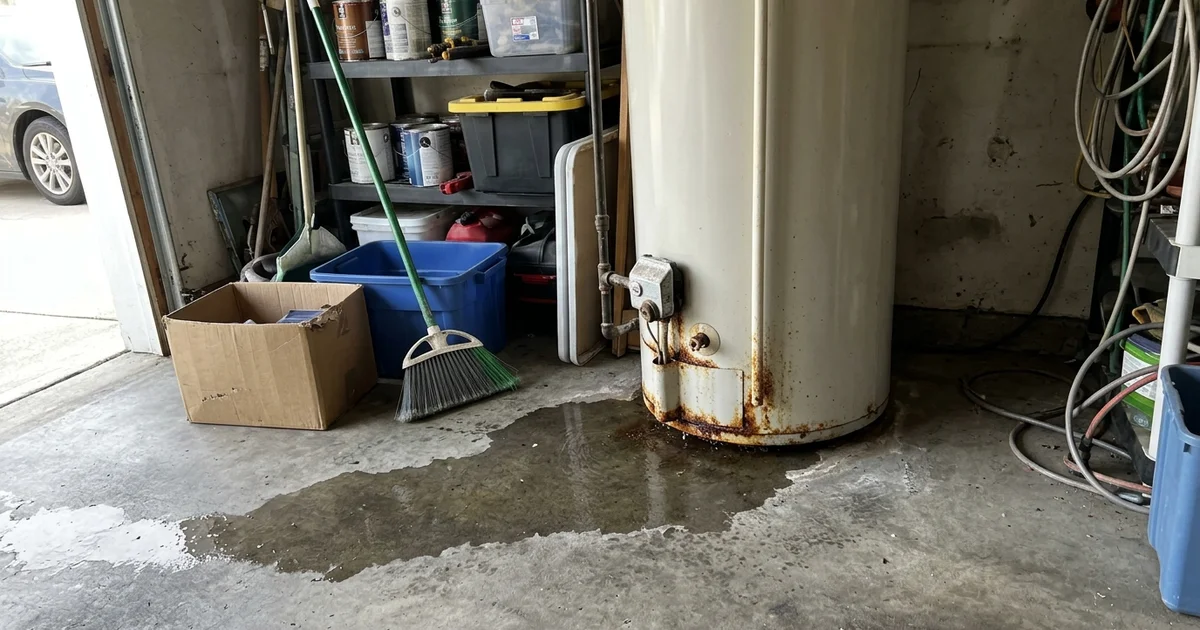
Water heaters rarely die without warning. They usually spend months dropping hints: a shower that runs cool sooner, a strange noise in the garage, a damp spot you wipe up and forget. In a place with real winters, those hints often get loud in December and January, when cold incoming water makes the heater work its hardest. Here is how to tell which signs need action today and which can go on the calendar.
The six signs at a glance
| # | Sign | Urgency | First move |
|---|---|---|---|
| 1 | Water coming from the tank itself | Act now | Shut off water and fuel or power, then call |
| 2 | Rust in the hot water only | This week | Book an inspection, start planning |
| 3 | Popping or rumbling while heating | Schedule service | Flush and anode check |
| 4 | Hot water runs out much sooner | Schedule service | Rule out dip tube, element, or sediment |
| 5 | Gas or electric bill creeping up | Monitor | Mention it at the next service |
| 6 | Age at or past the rated life | Plan ahead | Get an honest read on remaining life |
1. Water from the tank: act now
Moisture at the base can come from a fitting, the relief valve line, or condensation, and all of those can be fixed. But water seeping from the tank shell or bottom seam means the steel has corroded through. It will not heal, and it can let go all at once.
Right now: close the cold inlet valve on top of the heater, turn the gas control to off or switch off the breaker, and call.
2. Rust in the hot water only: act this week
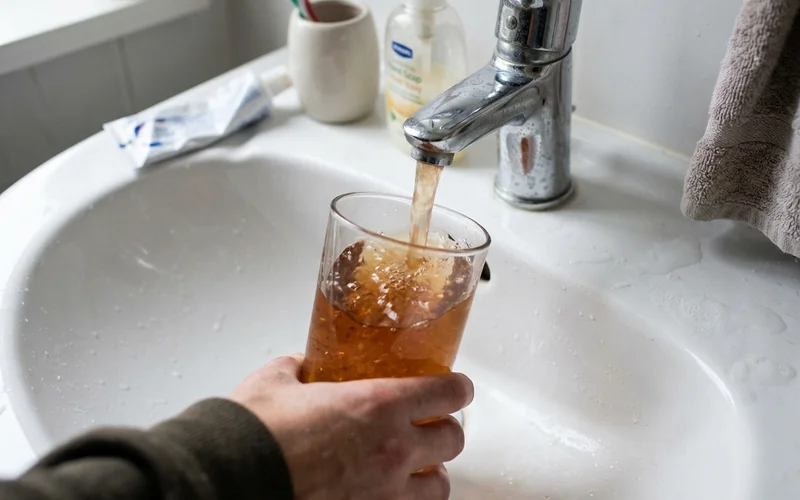
Run cold water into a white cup, then hot. If the cold is clear and the hot is tinted, the rust is coming from inside the tank, which usually means the anode rod is used up and the steel is corroding.
If both hot and cold run rusty, especially in an older central Prescott home, the more likely source is aging galvanized supply pipe, not the heater.
3. Popping or rumbling: schedule service
That noise is water trapped under sediment on the tank bottom, flashing to steam and bursting through. Prescott’s moderately hard water builds that layer slowly, so a noisy tank usually means years without a flush. Caught at this stage, a flush often quiets it.
4. Running out of hot water sooner: schedule service
This sign is especially common in winter, and it has several possible causes:
- Sediment filling the bottom of the tank and slowing recovery
- A failed lower element on an electric heater, leaving only the top half heating
- A broken dip tube, sending cold water straight to the outlet
- A tank that was always a little small for the household, now pushed by cold inlet water
The last three are repairs or adjustments, not a death sentence for the tank.
5. A rising energy bill: keep an eye on it
A burner or element heating through sediment runs longer for the same hot water. It is easy to miss because winter bills rise anyway, but a jump beyond your usual seasonal pattern is worth mentioning at the next service.
6. Age past the rated life: plan ahead
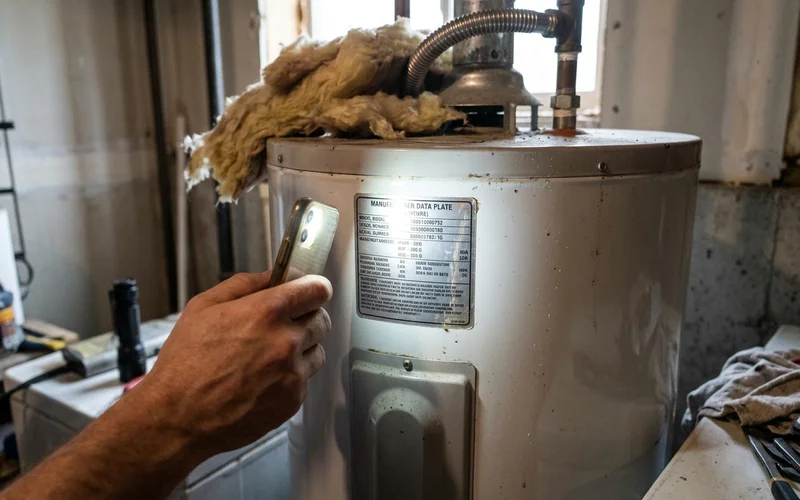
Age by itself is not a reason to replace a working heater, but it makes every other sign count for more. The data plate on the side lists the serial number, and most brands encode the build month and year in it. If you cannot decode it, read it to the assistant when you call.
Local expert insight
The worst time to lose a water heater is during a cold snap, when every plumber’s phone is ringing about frozen pipes. If your tank is showing signs 2, 3, or 6 in the fall, getting it looked at before the first hard freeze is the smart move.
Problems that usually mean a repair, not a new tank
| Symptom | Gas heater, likely cause | Electric heater, likely cause |
|---|---|---|
| No hot water, no leak | Pilot, thermocouple, or gas control | Tripped high-limit, failed element, or thermostat |
| Lukewarm water only | Thermostat or sediment | Lower element or thermostat |
| Pilot will not stay lit | Thermocouple or draft issue | Not applicable |
| Drip from the relief valve pipe | Failed valve or high system pressure | Same |
A dripping relief valve deserves prompt attention. It is a safety device, and the cause, whether a worn valve or excess pressure that needs an expansion tank, should be fixed rather than capped.
What to do next
Our water heater repair service covers gas, electric, and tankless units, and our guide on repair vs replacement walks through the decision. Call Prescott Plumbing Pros any hour, in English or Spanish, and request a free estimate. Ask about any service call fee before booking.