Old supply pipe almost never fails all at once. It fades. The shower gets weaker, the first glass in the morning comes out tinted, a joint in the crawl space starts to weep, and then another one does. By the time most homeowners ask about repiping, they already suspect that patching has stopped working. This guide is about making that call with clear criteria.
Galvanized steel: why it fails and how to spot it
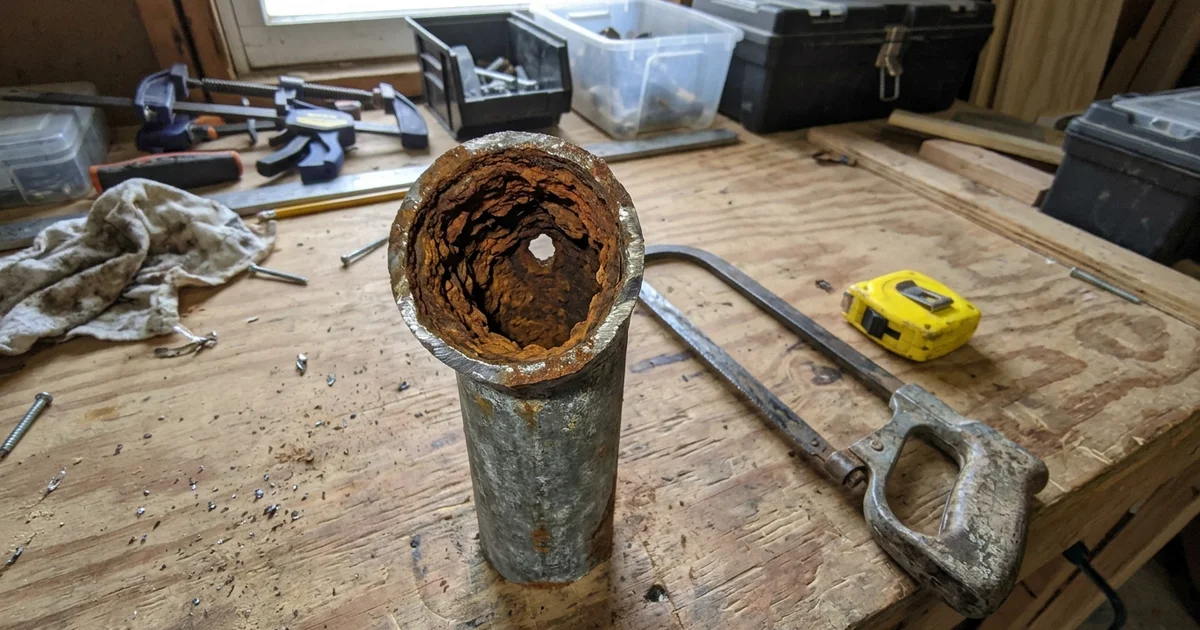
Many homes around Prescott’s historic downtown and older central neighborhoods still carry water through galvanized steel. The zinc coating inside wears away over decades. The bare steel underneath rusts into rough lumps that narrow the pipe, sometimes to a fraction of its original opening.
| What you notice | What is happening inside |
|---|---|
| Low pressure at every fixture | Rust buildup has narrowed the pipe |
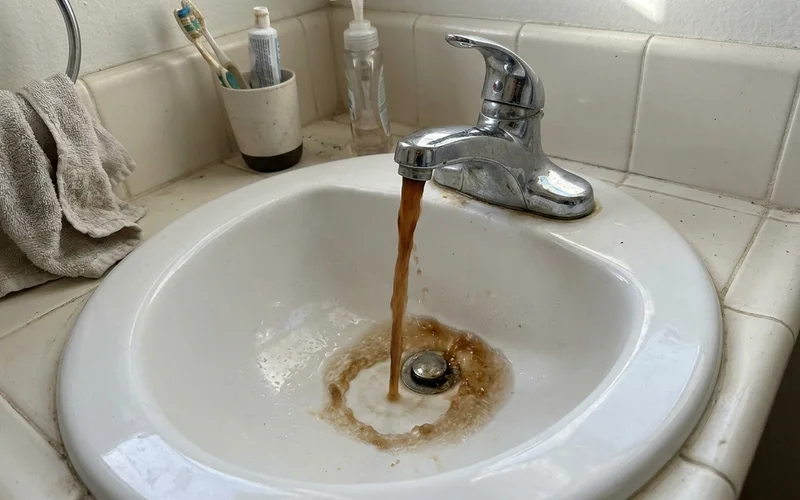
| Tinted water for the first few seconds, then clear | Rust has been sitting in the line overnight |
| Pressure drops sharply when a second tap opens | The narrowed pipe cannot deliver enough flow |
| Weeping or rust at threaded joints | Threads are the thinnest point and corrode first |
| Leaks in more than one place within a year or two | The system is aging out together |
Older homes may also have other materials worth checking. Some homes built in the 1980s and early 1990s used polybutylene, a gray plastic pipe that can fail at fittings. If you find it, plan to replace it.
One weak faucet, or the whole system?
A single weak faucet is usually a clogged aerator or a worn cartridge. These point to the pipes themselves:
- Pressure is low at every fixture, hot and cold
- The first draw is tinted in more than one room
- You have paid for leak repairs in different parts of the house
- The water heater was replaced recently and the hot side is still rusty
If several apply, the pipe is the problem. If you suspect a leak you cannot see, our guide to hidden leak signs covers how to confirm it.
Replacement materials compared
| Criteria | PEX | Copper | Keep the old pipe |
|---|---|---|---|
| Wall and ceiling openings needed | Fewer; flexible runs go around obstacles | More; rigid runs and soldered joints | None now, more later |
| Behavior in a freeze | Can stretch somewhat; more resistant to splitting, not freeze-proof | Rigid; splits when ice expands | Rigid and already weakened |
| Handles slight movement | Yes | Less | No |
| Install time | Faster | Slower | n/a |
| Relative install cost | Usually lower | Usually higher | Rising with every repair |
| Home-run manifold option | Common, with a shutoff per fixture | Possible but less common | n/a |
For most older Prescott homes, PEX is the practical choice. Copper is not wrong; it installs cleanly where runs are straight and accessible. Whatever the material, route new lines away from exterior walls and unheated spaces where you can, and insulate the ones that cannot be moved.
Whole-house or spot repair?
A spot repair makes sense when one section failed for an obvious reason, such as a pipe that froze in an exterior wall, and everything else has good pressure and clear water.
A whole-house repipe makes sense when pressure is down everywhere, first-draw water is tinted, leaks have appeared in several places, or the home is plumbed throughout in galvanized or polybutylene.
The math is simple. Each spot repair carries its own access, labor, and patching, and after three of them you still own old pipe.
Local expert insight
If you are remodeling a kitchen or bathroom in an older home, that is the best time to repipe. Much of the wall access is already part of the project, and it is a chance to move supply lines out of cold exterior walls.
What a repipe looks like, day to day
- Planning. The route for each line is mapped, and permit requirements are confirmed. Ask who pulls the permit.
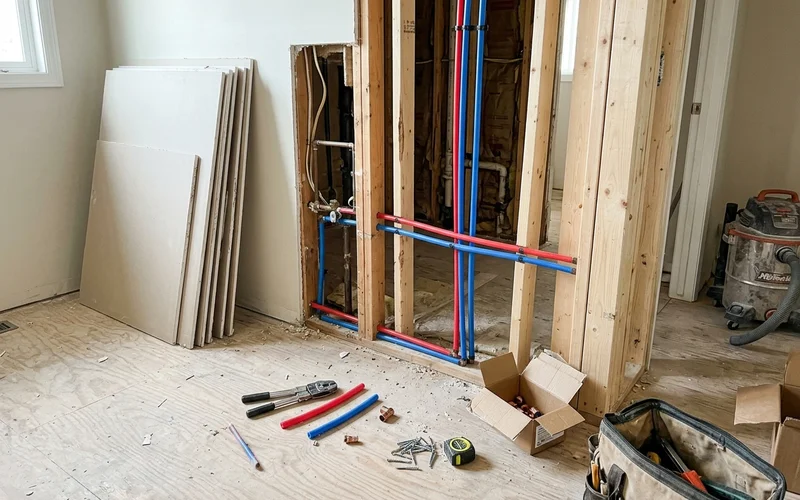
- Access openings. Small, patchable cuts at planned points, not whole walls.
- New runs. Lines to each fixture, often from a central manifold so each one can be shut off separately.
- Switchover. Water is off for part of each day and is usually back on by evening.
- Pressure test. Every connection is tested before walls close.
- Patching. Drywall repair; confirm whether it is in the estimate.
Most single-family repipes take one to five working days depending on size and access.
Next step
Before you get a repipe quote, confirm the problem really is system-wide. That is part of our leak detection and repiping work. Request a free estimate from Prescott Plumbing Pros, and ask about any service call fee before booking. Calls are answered 24/7 in English or Spanish, and your details go to a local plumber.