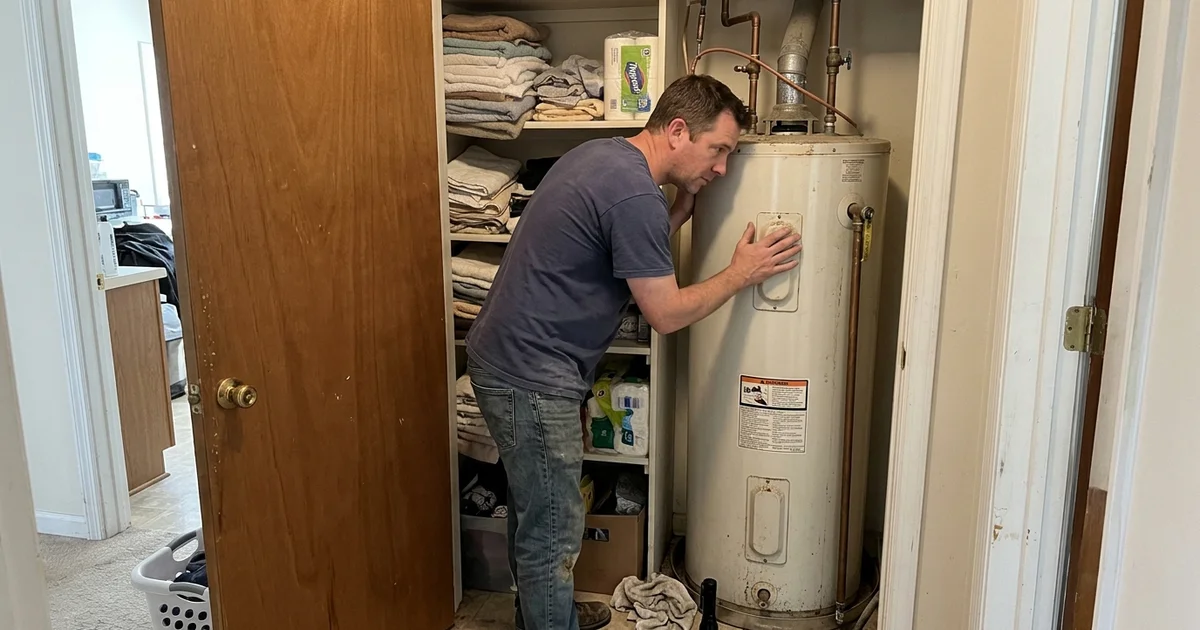
The moment you open the main valve on a house that has been empty is the moment any hidden damage shows itself. If a pipe cracked during a Prescott cold snap while you were gone, it is sitting there dry, waiting for pressure. Taking twenty minutes to check in the right order means you find it with the water off, not after it has soaked the subfloor.
The order that matters
| Step | Water status | Why |
|---|---|---|
| 1. Walk the house | Main still closed | Spot damage and freeze signs before adding pressure |
| 2. Check the heat | Main still closed | A cold house points to possible frozen or split pipes |
| 3. Open the main slowly | Opening | Lets you hear or see a leak before full pressure hits |
| 4. Meter test | Main open, all fixtures off | Confirms whether water is escaping |
| 5. Refill traps, check fixtures | Water flowing | Clears smells, finds dried-out seals |
| 6. Restart the water heater | Tank full | Protects the tank and elements |
1 and 2: Look, smell, and feel the temperature
Walk through with the water still off. Check ceilings, wall bases, cabinet floors, and around the water heater for stains, bubbling paint, warped flooring, or soft spots. If you can get into the crawl space or garage, look at the exposed pipes for frost, bulges, or splits. Note whether the house is cold. If the furnace quit or the power went out while you were away, assume pipes may have frozen even if nothing looks wrong yet.
A faint sewer smell near a drain is common and usually means a dry trap. A musty smell, mold, or warped flooring is different and suggests water has been there a while.
3 and 4: Open slowly, then test the meter
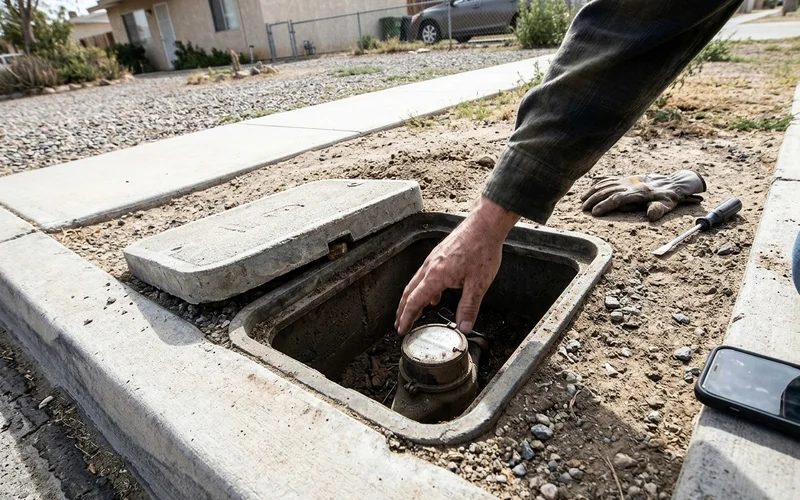
Open the main a quarter of the way and listen. Hissing, spraying, or the sound of running water inside a wall means close it again right away. If it is quiet, open it fully, make sure every faucet, toilet, and appliance is off, and check the meter. Note the reading, wait fifteen minutes, and check again. Any change, or a spinning low-flow indicator, means water is going somewhere: a split pipe, a running toilet, or a leak under the floor. Close the main and call.
Local expert insight
In Prescott, the pipes that split most often in a vacant house are the ones in the least protected spots: outdoor spigots, lines in exterior walls, and runs through unheated crawl spaces and garages. If the meter moves, those are the first places to look.
5: Refill traps and check each fixture
Run water down every drain for a minute, including floor drains and the tub nobody uses. If you put plumbing antifreeze in the traps before leaving, this flushes it through. Then open each faucet, hot and cold, and flush every toilet. Look under each sink for drips. A toilet that sat empty may have a flapper or fill valve that no longer seals. If a sewer smell sticks around after every trap is full, see where a sewer smell comes from.
6: Restart the water heater the safe way
Make sure the cold supply is open and the tank is completely full before you turn on the power or relight the gas. Open a hot faucet until water runs steadily, with no sputtering air. Then check the base and fittings for moisture. An electric heater turned on with an empty or partly empty tank can burn out its element in seconds.
When to call instead of pushing on
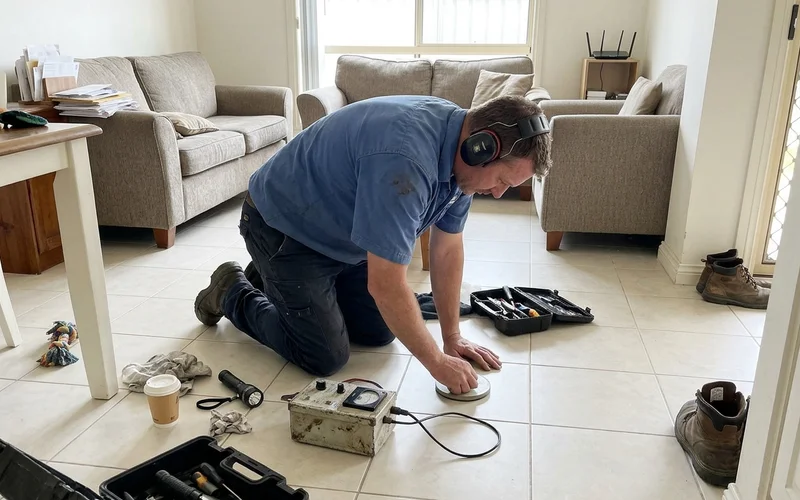
Call if the meter moves with everything off, if you find stains, soft spots, or frost-split pipes, if you hear water running with all fixtures closed, or if the water heater leaks. These match the signs in our guide to hidden leak warning signs. A call to Prescott Plumbing Pros at 928-555-0100 is answered at any hour in English or Spanish, and the details are routed to a local plumber. If the leak is hidden, our leak detection service finds it without guesswork. Request a free estimate and ask about any service call fee before booking.