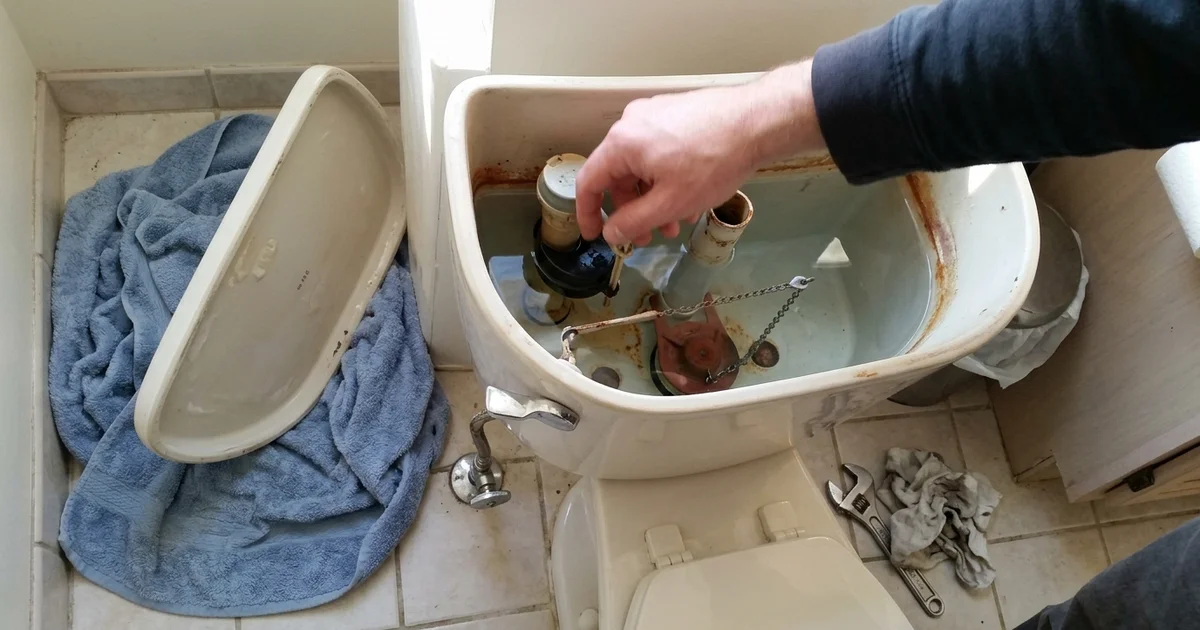
A running toilet is easy to tune out. It is a faint hiss, or a short refill every half hour, and the house still works fine. But it runs day and night, and the water bill shows it. The cause is almost always one of four parts in the tank, and you can usually tell which one in a few minutes.
Signs, ranked from minor to “call soon”
| What you notice | What it usually means | Urgency |
|---|---|---|
| Occasional short refill with nobody using it | Slow leak past the flapper | Low; fix this week |
| Constant faint hiss | Fill valve not shutting off, or water spilling into the overflow tube | Low to moderate |
| Have to jiggle the handle to stop it | Chain catching or flapper not dropping | Low; quick DIY fix |
| New flapper did not help | Worn or rough flush valve seat | Moderate; usually a plumber |
| Water on the floor at the base | Wax ring or tank-to-bowl seal | Call soon |
| Toilet rocks when you sit on it | Broken wax ring, possible subfloor damage | Call soon |
Step one: prove there is a leak
The two-minute dye test
Add a few drops of food coloring to the tank. Do not flush. Come back in 15 to 20 minutes. If color has appeared in the bowl, water is leaking past the flapper or the flush valve seat, even if you never hear it.
Step two: find the part
Lift the tank lid, flush, and watch a full cycle.
| What you see | Likely cause | Who can fix it |
|---|---|---|
| Water trickling into the bowl; tank refills on its own | Flapper not sealing | Usually DIY |
| Flapper does not drop fully, or the chain catches | Chain too tight, too loose, or tangled | DIY |
| Water spilling into the overflow tube | Fill valve not shutting off, or float set too high | DIY or plumber |
| New flapper, still leaking | Flush valve seat worn or rough | Usually a plumber |
| Water at the base | Wax ring or tank-to-bowl gasket | Plumber |
Why parts wear out
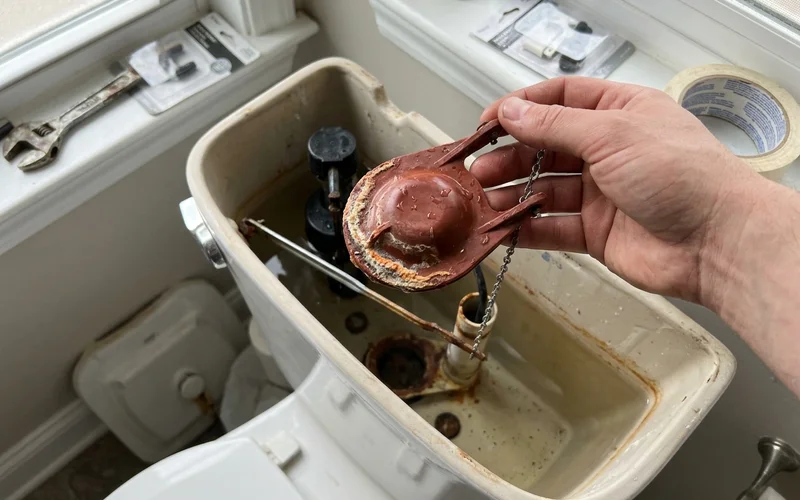
Rubber flappers stiffen and warp with age. Fill valve seals wear. Minerals in the water play a part too, though in Prescott, where the city describes its water as moderately hard, that part is modest; age and use usually matter more. On some private wells, sediment or harder water can wear tank parts faster. It is the same slow process that eventually affects faucet cartridges, covered in our guide on why fixture parts wear out.
A realistic DIY plan
These are manageable weekend jobs:
- Close the shutoff valve behind the toilet, then flush to empty the tank.
- Adjust the chain so it has a little slack, about one or two links, with the flapper closed.
- Replace the flapper. Bring the old one to the store to match the size; 2-inch and 3-inch flappers are not interchangeable.
- Gently clean the flush valve seat with a non-scratch pad.
- Set the float so water stops about an inch below the top of the overflow tube.
- If the fill valve is the culprit, a universal replacement is a reasonable swap for a handy homeowner.
The moment DIY stops making sense
- The shutoff behind the toilet will not close, or it leaks at the stem when you turn it.
- The supply line connections look corroded and you are worried about breaking them.
- The flush valve seat is damaged and needs replacing.
- There is water at the base, or the toilet rocks.
- You have fixed the same toilet two or three times in a couple of years.
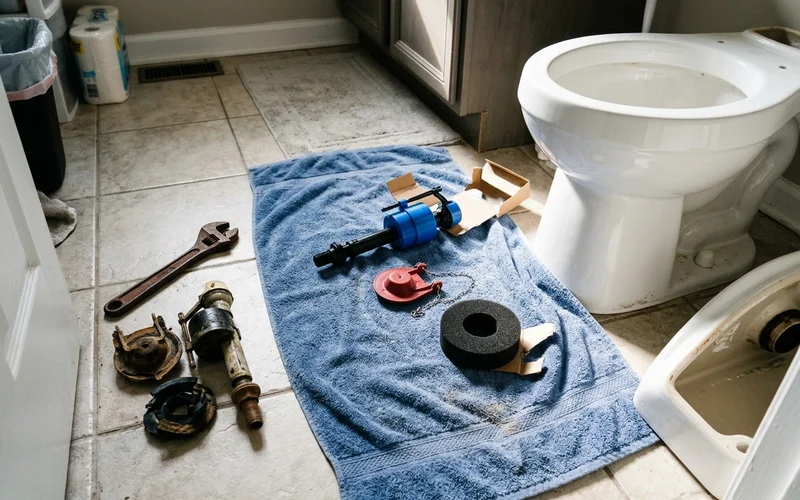
A rocking toilet deserves attention. It breaks the wax seal, which can let water and sewer gas into the subfloor. When a tank has needed repeated repairs, a full rebuild, with new flapper, fill valve, flush valve, gaskets, and shutoff, usually beats replacing one part at a time.
Cabins and second homes
Local expert insight
A running toilet in a house nobody is living in can waste water for weeks. Before leaving a Prescott cabin or second home, close the shutoff behind each toilet as well as the main. If you winterize with the water drained, flush each toilet to empty the tank too.
Our fixture repair service covers toilet rebuilds, wax rings, and shutoff valves. Call Prescott Plumbing Pros any hour, in English or Spanish, and request a free estimate. Ask about any service call fee before booking.