It is a Saturday night in Prescott, dirty water is rising in the shower, and the toilet gurgles when someone runs the sink. A main line backup does not wait for Monday. Here is what to do, in order, and what to expect once help is on the way.
What to expect at a glance
| Stage | Who | About how long |
|---|---|---|
| Stop water use and confirm it is the main line | You | 5 minutes |
| Call and answer four questions | You and the assistant | 3 to 5 minutes |
| Find the cleanout, make the area safe | You | 10 to 15 minutes |
| Controlled opening and clearing | Plumber | Often 1 to 2 hours on site |
| Camera inspection, if it is a repeat backup | Plumber | Same visit or a follow-up |
Step 1: Stop every drop of water use
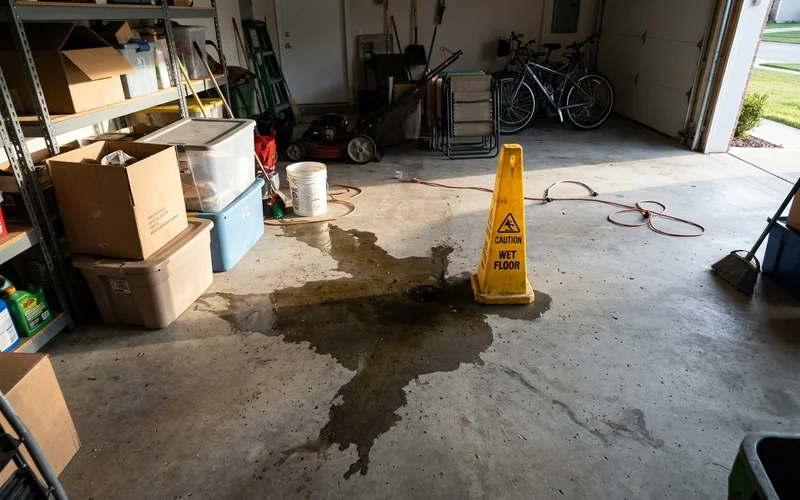
A main line backup means the blockage sits downstream of every drain in the house. Water has nowhere to go, so it rises at the lowest opening: a shower pan, a tub, a basement floor drain.
- No flushing.
- No showers, sinks, or dishwasher.
- Stop the washing machine mid-cycle. Its drain pump moves a lot of water fast.
- Tell everyone in the house, out loud, right now. One uninformed flush undoes your cleanup.
Step 2: Confirm it really is the main line
| What you see | One drain (branch) | Whole house (main) |
|---|---|---|
| One sink or tub slow, everything else fine | ✓ | |
| Flushing the toilet makes the tub or shower rise | ✓ | |
| Several drains backing up | ✓ | |
| Floor drain overflowing | ✓ | |
| Gurgling in one drain when another runs | ✓ |
A branch clog can usually wait until morning. A main line cannot, because the house is unusable until it is cleared. Our guide on what counts as a plumbing emergency covers other borderline calls.
Step 3: Call and give the details
Call the emergency plumbing line at 928-555-0100. It is answered 24 hours a day, weekends and holidays included, in English or Spanish. The automated assistant will ask:
- Which drains are backing up, and where in the house?
- When did it start, and has it happened before?
- Is anyone still using water?
- Do you know where the cleanout is?
Those answers go to a local plumber, so the right drain machine, and a camera if this is a repeat, come on the truck.
Step 4: Find the cleanout, but leave the cap on
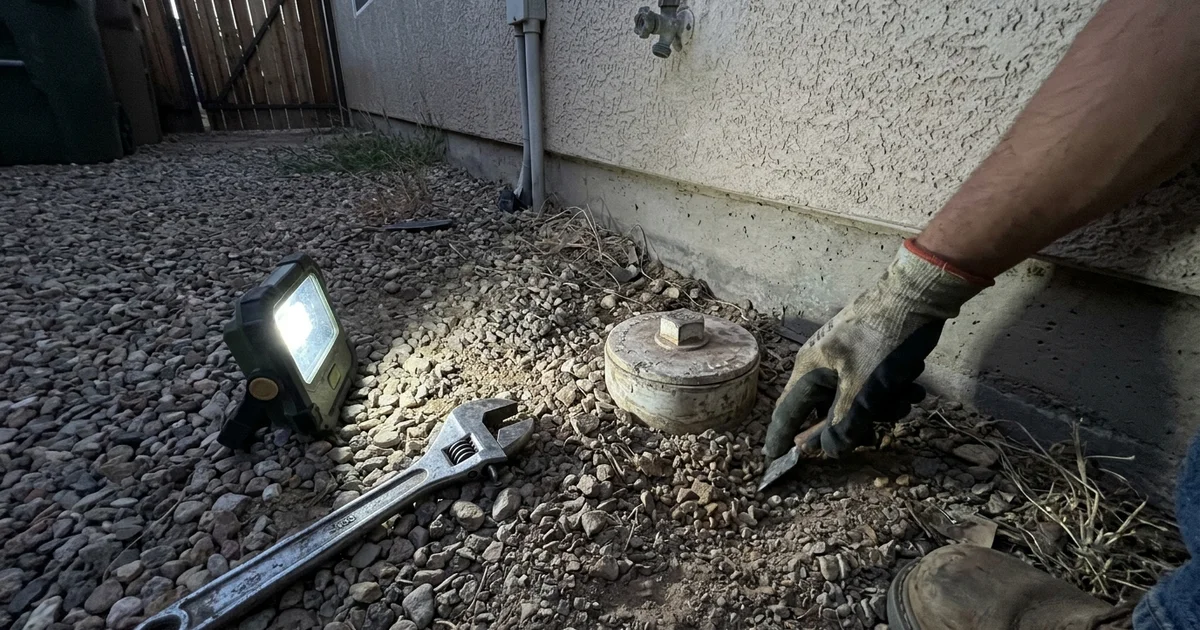
The cleanout is a capped pipe along the sewer line’s path to the street, often near the foundation on the bathroom side of the house or in a side yard. In some homes it is inside, in a basement or crawl space. In winter, it may be under snow. Clearing a path to it now saves real time later.
Leave the cap alone
A blocked line can be holding a column of sewage behind that cap. Opening it can release all of it at your feet. Let the plumber open it with containment ready.
Some older homes around downtown Prescott were built without an accessible cleanout. The plumber can work through a pulled toilet or a roof vent, and adding a proper cleanout during the visit makes every future call faster.
Step 5: Stay safe around it
- Keep children and pets out of the area.
- Wear rubber gloves and boots if you must walk through it.
- Cut power to circuits if water has reached outlets, especially low outlets in basements and garages.
- Keep the heat on, even with doors or windows open for ventilation, so pipes do not freeze in the meantime.
- Wash hands and clothing thoroughly, and launder those clothes separately.
- Plan to discard soaked carpet, padding, cardboard, and particleboard.
What happens when the plumber arrives
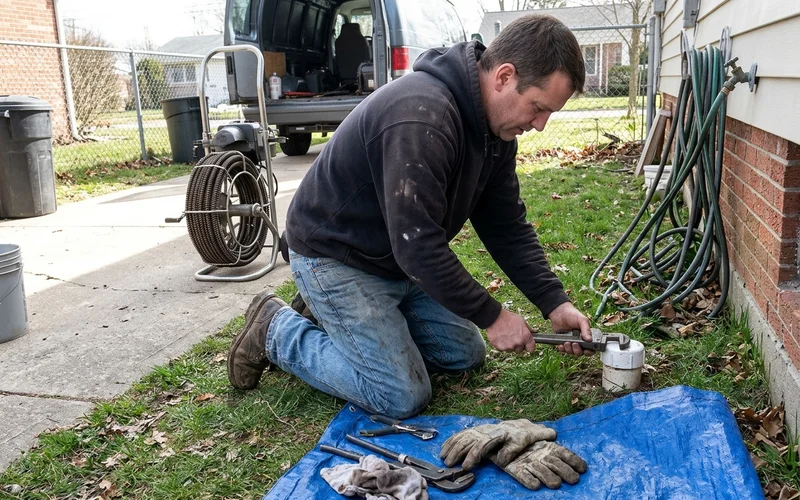
- Controlled opening of the cleanout to relieve standing water safely.
- Clearing with a cable machine, or hydro jetting if the line is packed with grease or roots.
- Flow test by running water through several fixtures.
- Camera, if needed. For a first backup caused by something that should not have been flushed, clearing may be enough. For a repeat, a camera shows why: roots, a sag, an offset joint, or a break.
Local expert insight
Older cast iron and clay lines in central neighborhoods are the most common repeat offenders, usually from roots or corrosion. If your house is older and this is not the first backup, mention it on the call so the plumber brings a camera.
Repeat backups belong with our drain cleaning service, where camera inspection is part of the job. Call Prescott Plumbing Pros any hour, and ask about any service call fee and after-hours rates when you book.