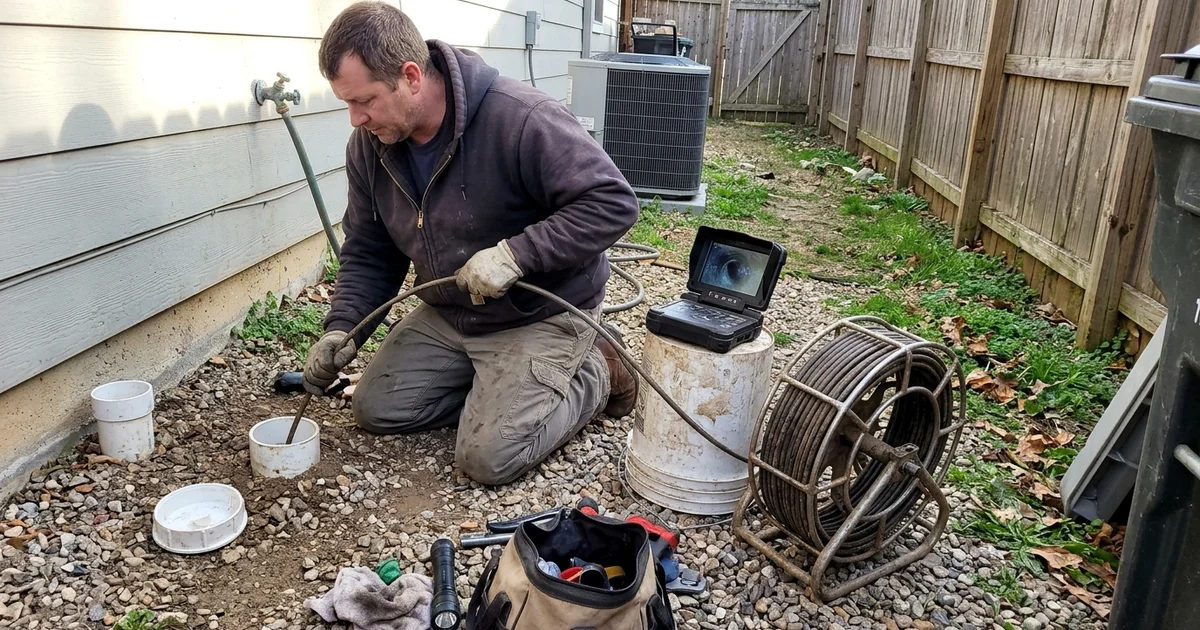
Your sewer line runs underground from your Prescott home to the street, completely out of sight. When it starts causing trouble, a camera inspection is the only way to see what is actually happening inside it without digging. Here is how it works, what common problems look like on the monitor, and when it is worth booking.
The definition, plainly
A sewer camera inspection is a video survey of the inside of your drain line. A waterproof camera with bright LEDs rides on the end of a stiff, flexible push cable. The plumber feeds it through a cleanout and pushes it toward the street while live video plays on a monitor. A locator then finds the camera head from the surface, so any problem can be marked on the ground with its depth.
It is a diagnostic, not a repair. It tells you what is wrong, where, and how bad, so the repair, if any, can be chosen correctly.
How a visit usually goes
- Access. The camera goes in at a cleanout. If there is none, a toilet may be pulled or a roof vent used.
- Clearing, if needed. A full blockage or standing water hides everything past it, so the line is often opened first as part of drain cleaning.
- Recording. The camera travels the line while the plumber narrates what is on screen. You can and should watch.
- Locating. At each problem, the transmitter is traced from above and marked.
- Explanation. You hear what was found and what it means, including “the line is fine” when that is true.
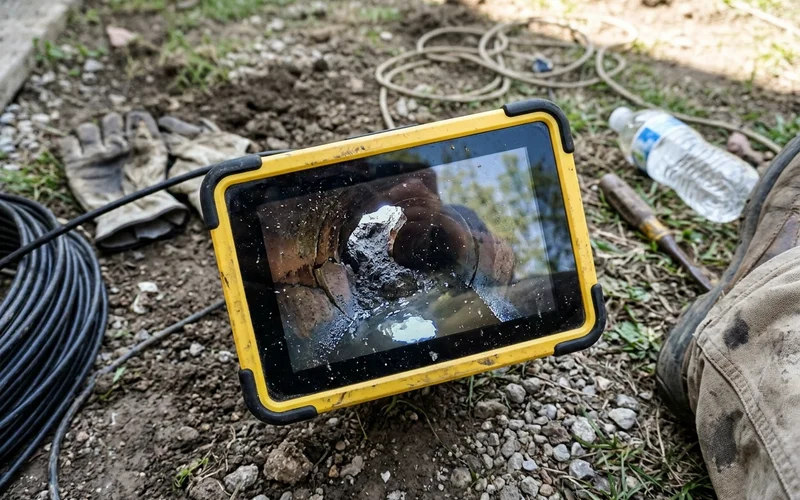
Reading the monitor
| On screen | What it is | What it usually means |
|---|---|---|
| Hair-like strands or a dense mat at a joint | Roots | Roots found a leaking joint; they regrow after clearing |
| A dark line along the pipe, sometimes with soil visible | Crack or break | Water out, soil in; tends to worsen |
| Water pooled across the pipe for several feet | Belly or sag | Ground settled under the pipe; solids collect in the low spot |
| A sharp ledge where two sections meet | Offset joint | Ground movement pushed sections out of line |
| Rough, lumpy walls in cast iron | Corrosion | Rust mounds narrowing the pipe and catching debris |
| A smooth coating narrowing the pipe | Grease or buildup | Jetting usually helps |
| Camera stops at a pile of soil | Collapse | That section has failed and needs repair |
| Clean, round pipe all the way out | Healthy line | The backup was likely a one-time event |
What tends to show up in this area
Older central homes. Around Prescott’s historic downtown and the older neighborhoods nearby, many homes still drain through cast iron or clay. Cast iron develops rust buildup and cracks along the bottom; clay joints let roots in from established trees. The usual finding is not one dramatic break but an old line with several small problems adding up.
Seasonal ground movement. Freeze, thaw, and spring snowmelt work on the soil year after year, and that can show up on camera as offset joints and sags.
Newer construction. Plastic lines in newer subdivisions rarely have roots or corrosion, but construction debris, poorly bedded sections, and sags do appear.
Local expert insight
One root ball is a maintenance item. Roots at every joint, plus an offset and a sag, is a line wearing out along its whole length. The camera tells you which one you have, and that changes the repair conversation completely.
Why locating saves money
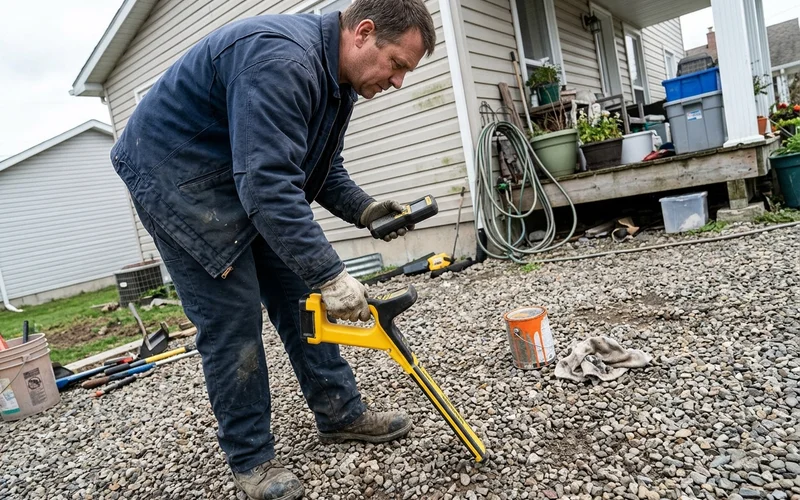
When the camera reaches a problem, it stops there. The transmitter sends a signal up through the ground, and the plumber walks the yard with a handheld locator, finds the strongest signal, reads the depth, and marks the spot. A repair becomes one targeted opening instead of exploratory digging. That is the difference between cutting a small square of driveway and trenching across the front yard.
Five times an inspection is worth booking
- After a second backup in a year. Once is an event; twice is a condition.
- Before buying an older home, inside your inspection period.
- Before hydro jetting an old cast iron or clay line, to confirm it can take the pressure.
- After a backup that caused damage, so you have video for an insurance claim.
- When a repair quote seems large. Ask to see the footage behind it.
If you are seeing slow drains, odors, or damp soil at the foundation, our guide on signs of a broken sewer line under the house covers those symptoms. You should leave every inspection with live viewing, a copy of the footage, the location and depth of any problem, and a plain explanation. Call Prescott Plumbing Pros at any hour in English or Spanish to request a free estimate, and ask about any service call fee before booking.