If you have noticed white spots on glasses or a little crust on the shower head, your water has some hardness to it. The useful question is how much, and whether it is enough to change what you do. For homes on Prescott city water, the honest answer is: moderate, and a softener is optional. Here is what that means in practice.
The number, explained
The City of Prescott describes its water as moderately hard, averaging 75 to 130 ppm, which is about 4.3 to 7.6 grains per gallon. You will see both units. Lab reports and utility documents tend to use ppm (or mg/L, which is the same thing). Water treatment equipment is usually set in grains per gallon. To convert, divide ppm by about 17.1.
| What you might read | City supply |
|---|---|
| City description | Moderately hard |
| Parts per million (ppm, mg/L) | About 75 to 130 |
| Grains per gallon (gpg) | About 4.3 to 7.6 |
That range will not ruin plumbing quickly. It does mean minerals are present, and over years they collect in the places where water is heated or left to dry.
Not on city water? Test before you decide anything
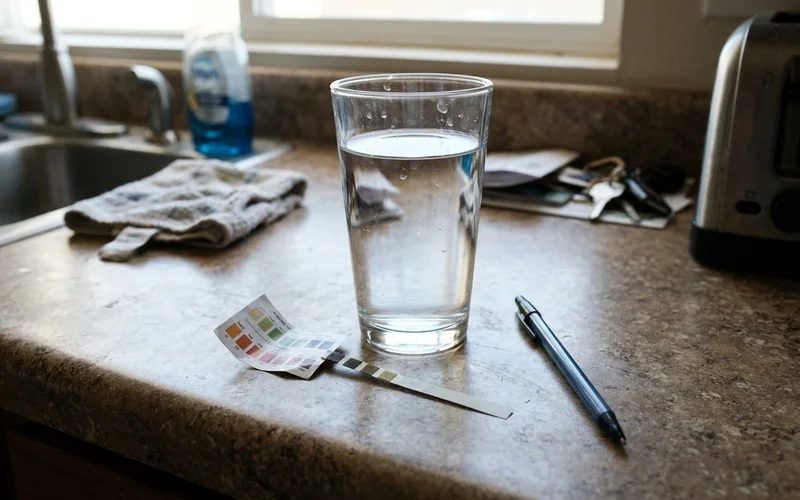
Many homes around the Quad-City area are on private wells or a different provider. Well water in particular can be very different from the city supply, sometimes harder, sometimes with iron or sulfur. A test strip from a hardware store gives a rough number in a minute. A lab test gives the full picture if you are planning to buy equipment.
Where moderate hardness actually shows up
Minerals stay dissolved while water is cold and moving. Two things pull them out: heat and evaporation. So the effects concentrate in a few predictable places.
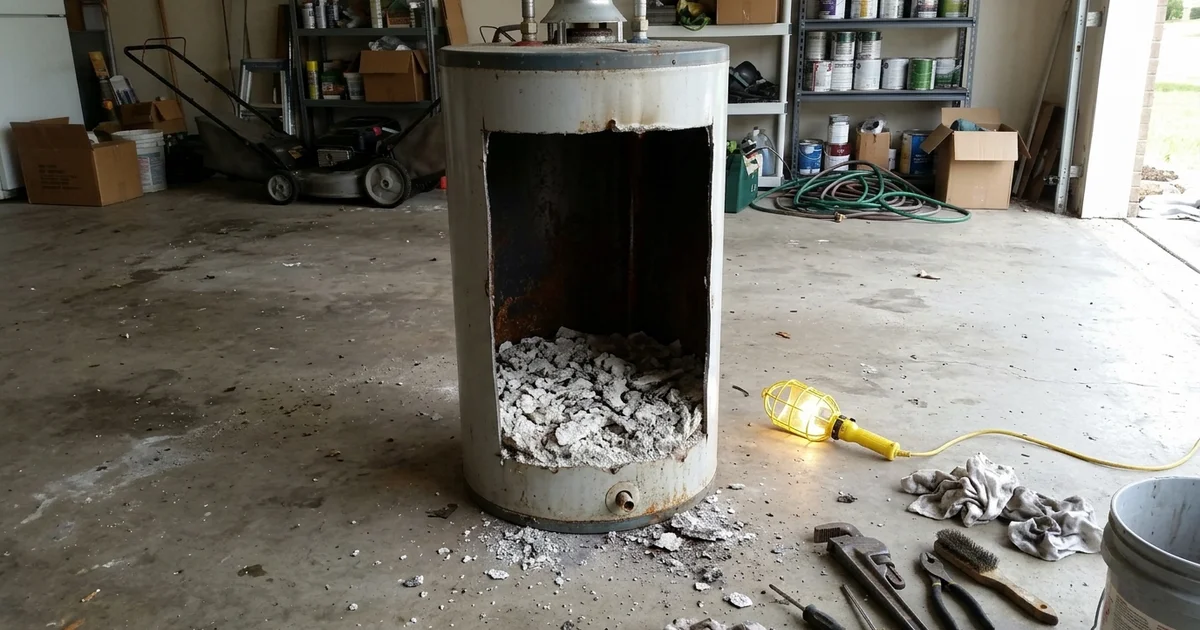
Water heaters. Each heating cycle drops a little sediment to the bottom of the tank. At moderate hardness, the layer builds slowly, but an unflushed tank still collects it over the years. Prescott winters add to the workload, because cold incoming water means longer heating cycles. Popping or rumbling during heating is the usual first sign. Our water heater repair page covers flushing and service.
Tankless units. The narrow heat exchanger is the most sensitive spot in the house. Even moderately hard water calls for periodic descaling.
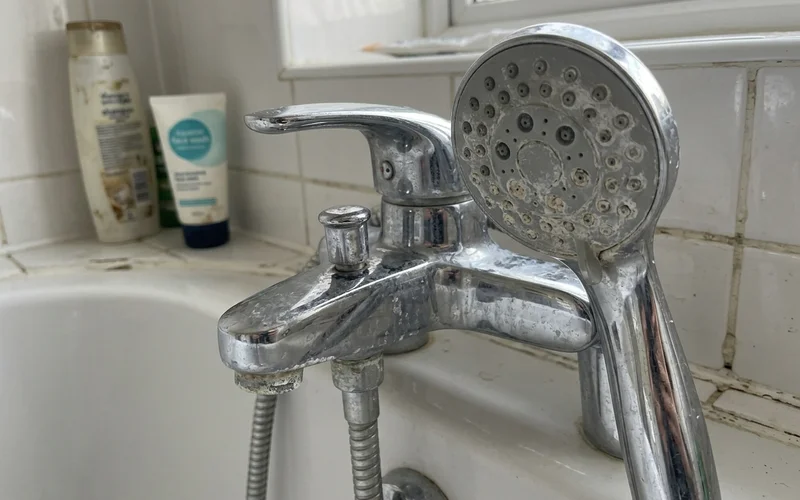
Fixtures and aerators. The white crust on shower heads and faucet aerators is evaporation at work. It is mostly cosmetic and easy to clean.
Glassware and dishwashers. Spotting is the most visible sign. A rinse aid often handles it.
Valves. Shutoffs that are never turned can still stiffen over the years, from minerals and from simply sitting. Exercising them once a year matters more than the hardness number.
Hardness versus the problems that matter more here
In very hard water regions, scale is the main plumbing story. Here, it is a supporting character. The bigger issues in this area are cold-weather ones: frozen and burst pipes, frozen outdoor spigots, water heaters working hard on cold incoming water, and aging galvanized supply lines in older central homes. Rust-colored water or dropping pressure in an older house is more likely to be corroding galvanized pipe than mineral scale.
What you can do, from simplest to most involved
| Step | What it helps | When it makes sense |
|---|---|---|
| Clean aerators and shower heads | Restores flow at that fixture | Whenever crust builds up |
| Flush the water heater yearly | Clears sediment before it hardens | Every home with a tank |
| Descale a tankless unit | Keeps the heat exchanger clear | On the manufacturer’s schedule, adjusted for use |
| Use a dishwasher rinse aid | Reduces spotting | If spots bother you |
| Whole-home softener | Removes hardness at every tap | A comfort and appliance-life choice, not a requirement on city water |
| Reverse osmosis at one tap | Better drinking and cooking water | If taste is the concern |
Local expert insight
On city water here, a softener is a preference, not a necessity. Households that choose one usually do it for softer-feeling water, less spotting, or extra protection for a tankless heater. If you are on a well, test first, because the right answer may be very different.
The bottom line
The water here is moderately hard. It calls for routine maintenance, not alarm. If you want an opinion on whether treatment is worth it for your household, our water softeners and reverse osmosis service starts with a test at your tap. Prescott Plumbing Pros takes calls any hour, in English or Spanish, and sends the details to a local plumber. Request a free estimate and ask about any service call fee before booking.